

Vincent van Gogh (1853–1890)
Vincent van Gogh sold one painting in his lifetime. One.
He was born in the Netherlands in 1853, the son of a Dutch Reformed pastor. Before he picked up a brush seriously, he spent seven years working for Goupil & Cie, one of Europe's most powerful art dealerships. He moved through their offices in The Hague, London, and Paris. He understood exactly how the market worked. He knew what the Kingmakers were buying, what they were pricing, and what they were ignoring. He watched it operate from the inside. Then he left, failed at theology school, failed at missionary work, and started painting at twenty-seven.
He produced over nine hundred paintings in ten years. He sold one.
The market that had made him a clerk did not know what to do with his work. It was too raw. Too urgent. Too directly tied to what he was feeling rather than what was decorative or sanctioned. The Impressionists were painting recognizable light. Van Gogh was painting what it felt like to stand in it. The dealers passed. The critics, when they noticed him at all, were confused.
His brother Theo, who worked inside the same dealership machine that ignored Vincent's work, kept him alive financially and emotionally for a decade. The letters between them are among the most significant documents of the nineteenth century — a complete record of an artist working in total isolation from recognition.
Van Gogh died in July 1890 at thirty-seven, still painting. Theo died six months later.
The paintings that sold for nothing now trade for hundreds of millions. The Kingmakers who set those prices were not in the room when he made them.
Post-Impressionism
Masterpieces by Van Gogh


Showing 1-20 of 68 Results
-
Van Gogh, Vincent - Sunflowers (Third version) (1888) - Suitcase
Regular price $225Sale price $225 Regular priceUnit price per -
Van Gogh, Vincent - Head of a Skeleton with a Burning Cigarette (1886) - Suitcase
Regular price $225Sale price $225 Regular priceUnit price per -
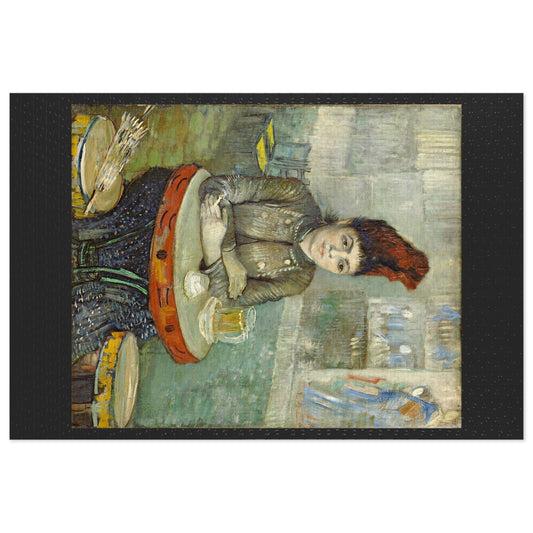
Van Gogh, Vincent - Agostina Segatori Sitting in the Café du Tambourin (1887) - Suitcase
Regular price $225Sale price $225 Regular priceUnit price per -
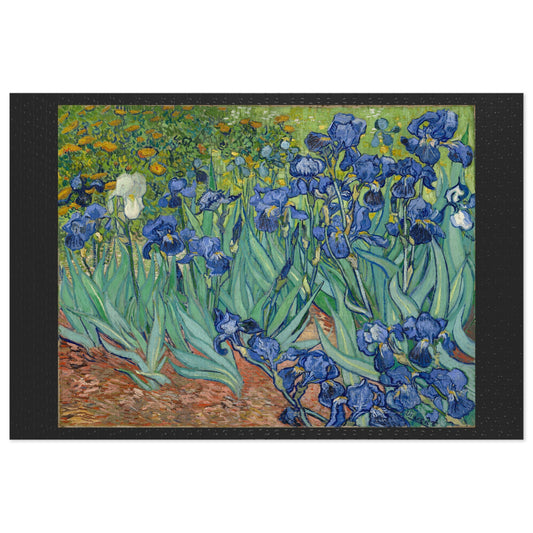
Van Gogh, Vincent - Irises (1889) - Suitcase
Regular price $225Sale price $225 Regular priceUnit price per -
Van Gogh, Vincent - Self-Portrait with Grey Felt Hat (1887) - Suitcase
Regular price $225Sale price $225 Regular priceUnit price per -
Van Gogh's "Irises" - 1000pc Jigsaw Puzzle
Regular price $50Sale price $50 Regular priceUnit price per -
Van Gogh's "Sunflowers (Third Version)" - 1000pc Jigsaw Puzzle
Regular price $50Sale price $50 Regular priceUnit price per -
Van Gogh's "Self-Portrait with Grey Felt Hat" - 1000pc Jigsaw Puzzle
Regular price $50Sale price $50 Regular priceUnit price per -
Van Gogh's "Head of a Skeleton with a Burning Cigarette" - 1000pc Jigsaw Puzzle
Regular price $50Sale price $50 Regular priceUnit price per -
Van Gogh's "Agostina Segatori Sitting in the Café du Tambourin" - 1000pc Jigsaw Puzzle
Regular price $50Sale price $50 Regular priceUnit price per -
Van Gogh, Vincent - The Yellow House (1888)
Regular price $140Sale price $140 Regular priceUnit price per -
Van Gogh, Vincent - Wheatfield with Crows (1890)
Regular price $140Sale price $140 Regular priceUnit price per -
Van Gogh, Vincent - Sunflowers (Third Version) (1888)
Regular price $140Sale price $140 Regular priceUnit price per -
Van Gogh, Vincent - Head of a Skeleton with a Burning Cigarette (1886)
Regular price $140Sale price $140 Regular priceUnit price per -
Van Gogh, Vincent - Agostina Segatori Sitting in the Café du Tambourin (1887)
Regular price $140Sale price $140 Regular priceUnit price per -
Van Gogh, Vincent - The Night Cafe (1888)
Regular price $140Sale price $140 Regular priceUnit price per -
-
Van Gogh, Vincent - Self-Portrait with Grey Felt Hat (1887)
Regular price $140Sale price $140 Regular priceUnit price per -
Van Gogh, Vincent - Portrait of Dr. Paul Gachet (1890)
Regular price $140Sale price $140 Regular priceUnit price per -
Van Gogh, Vincent - Self Portrait with Bandaged Ear (1889)
Regular price $140Sale price $140 Regular priceUnit price per






Nota Bene
The Art History Study Units were designed and researched as a brief survey to introduce each period in time. The Masters and Masterpieces collected here are not a complete view nor a complete roster of all Masters nor even all of their Works.
In the Art History Essays, presented in the blog articles, as well as included in the product description for each product under the "Design Story" tab, you will find academic citations.
If you are interested in more scholarship about a single piece or an artist, use those bibliographies as a starting point to learn more.