

Camille Pissarro (1830–1903)
Camille Pissarro gave the Impressionist movement something it could not have built without him. He was its spine. He was the only artist to exhibit in all eight Impressionist exhibitions. He mentored Cézanne, Gauguin, and van Gogh. He held the group together when ego and money and aesthetic disagreement threatened to scatter it. Cézanne called him humble and colossal. He was both.
The Kingmakers had more material to work with against Pissarro than against any of his peers. He was born in the Danish West Indies in 1830, the son of a French Sephardic Jewish father and a Creole mother. He was not what the French art establishment considered a natural heir to its traditions. He was Jewish. He was a colonial subject. He was an anarchist — not as affectation but as a genuine political commitment that showed up directly in his work, in the peasants and market workers and rural laborers he painted with the same gravity history painters reserved for emperors.
During the Franco-Prussian War of 1870, he fled Paris for London. Prussian soldiers occupied his home. They used his stored canvases as floorboards and slaughterhouse mats. Hundreds of paintings. Gone. He came back and kept painting.
The Dreyfus Affair broke open in 1894. Pissarro, as a Jewish man in France, did not need to read the newspapers to understand what it meant. The anti-Semitism that had always been ambient in the critical establishment had a name now.
He died in 1903 at seventy-three. Remove him from the Impressionist story and the map falls apart. The Kingmakers knew that. They tried anyway.
Impressionism, Pointilism
Masterpieces by Pissarro


Showing 1-24 of 43 Results
-
Pissarro, Camille - The Boulevard Montmartre At Night (1897) - Colorful Accent Mugs
Regular price $28Sale price $28 Regular priceUnit price per -
Pissarro, Camille - The Boulevard Montmartre At Night (1897) - Ceramic Mug
Regular price $28Sale price $28 Regular priceUnit price per -
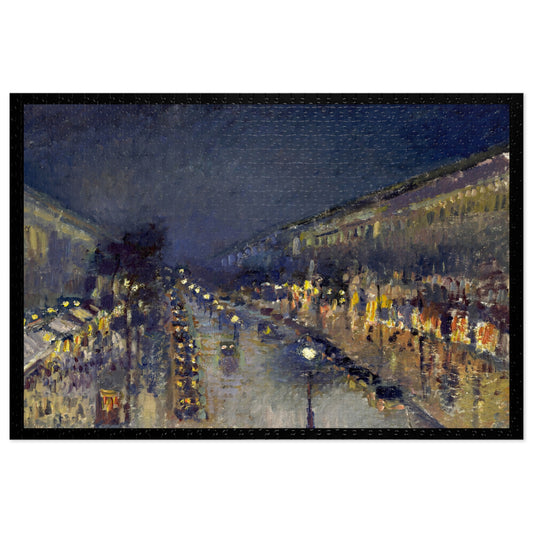
Pissarro, Camille - The Boulevard Montmartre At Night (1897) - Rubber Yoga Mat
Regular price $98Sale price $98 Regular priceUnit price per -
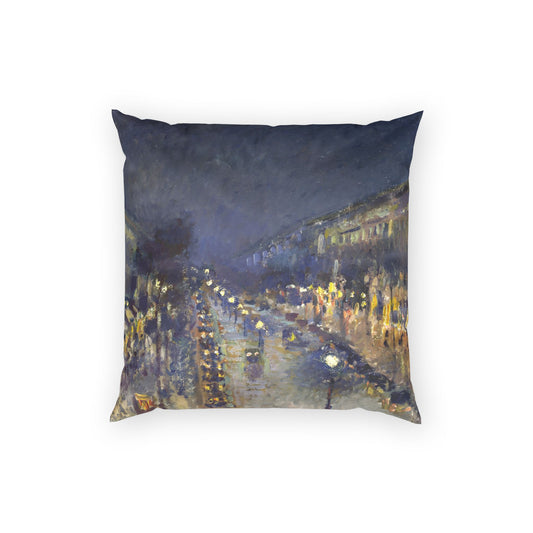
Pissarro, Camille - The Boulevard Montmartre At Night (1897) - Poly Velvet Pillow
Regular price $49Sale price $49 Regular priceUnit price per -
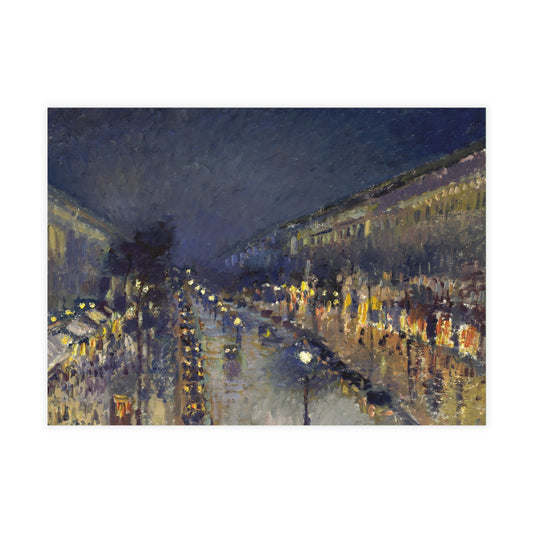
Pissarro, Camille - The Boulevard Montmartre At Night (1897) - Postcard Bundles with Envelopes Included
Regular price $30Sale price $30 Regular priceUnit price per -
Pissarro, Camille - The Boulevard Montmartre At Night (1897) - Suede Square Pillowcase
Regular price $37Sale price $37 Regular priceUnit price per -
Pissarro, Camille - The Boulevard Montmartre At Night (1897) - Suede Square Pillow
Regular price $39Sale price $39 Regular priceUnit price per -
Pissarro, Camille - The Boulevard Montmartre At Night (1897) - Weekender Bag
Regular price $58Sale price $58 Regular priceUnit price per -
Pissarro, Camille - The Boulevard Montmartre At Night (1897) - Hardcover Journal Matte
Regular price $28Sale price $28 Regular priceUnit price per -
Pissarro, Camille - The Boulevard Montmartre At Night (1897) - Arctic Fleece Blanket
Regular price $38Sale price $38 Regular priceUnit price per -
Pissarro, Camille - The Boulevard Montmartre At Night (1897) - Sherpa Fleece Blanket
Regular price $58Sale price $58 Regular priceUnit price per -
Pissarro, Camille - The Boulevard Montmartre At Night (1897) - Tote Bag
Regular price $30Sale price $30 Regular priceUnit price per -
Pissarro, Camille - The Boulevard Montmartre At Night (1897) - Velveteen Plush Blanket
Regular price $42Sale price $42 Regular priceUnit price per -
Pissarro, Camille - The Boulevard Montmartre At Night (1897) - Woven Blanket
Regular price $63Sale price $63 Regular priceUnit price per -
Pissarro, Camille - The Boulevard Montmartre At Night (1897) - Laundry Bag
Regular price $50Sale price $50 Regular priceUnit price per -
Pissarro, Camille - The Boulevard Montmartre At Night (1897) - 1000pc Jigsaw Puzzle
Regular price $50Sale price $50 Regular priceUnit price per -
Pissarro, Camille - Red Roofs, Corner of a Village in Winter (1877) - Matte Canvas, Framed
Regular price $55Sale price $55 Regular priceUnit price per -
Pissarro, Camille - The Boulevard Montmartre At Night (1897) - Matte Canvas, Framed
Regular price $55Sale price $55 Regular priceUnit price per -
Pissarro, Camille - The Boulevard Montmartre At Night (1897) - Canvas Block, unframed
Regular price $35Sale price $35 Regular priceUnit price per -
Pissarro, Camille - Red Roofs, Corner of a Village in Winter (1877) - Canvas Block, unframed
Regular price $35Sale price $35 Regular priceUnit price per -
Pissarro, Camille - Boulevard Montmartre, Winter Morning (1897) - Canvas Block, unframed
Regular price $35Sale price $35 Regular priceUnit price per -
Pissarro, Camille - The Boulevard Montmartre At Night (1897) - Canvas Block, unframed
Regular price $35Sale price $35 Regular priceUnit price per -
Pissarro, Camille - Hoarfrost (1873) - Canvas Block, unframed
Regular price $35Sale price $35 Regular priceUnit price per -
Pissarro, Camille - A Cowherd at Valhermeil, Auvers-sur-Oise (1874) - Canvas Block, unframed
Regular price $35Sale price $35 Regular priceUnit price per







Nota Bene
The Art History Study Units were designed and researched as a brief survey to introduce each period in time. The Masters and Masterpieces collected here are not a complete view nor a complete roster of all Masters nor even all of their Works.
In the Art History Essays, presented in the blog articles, as well as included in the product description for each product under the "Design Story" tab, you will find academic citations.
If you are interested in more scholarship about a single piece or an artist, use those bibliographies as a starting point to learn more.