Skip to product information
1 of 224

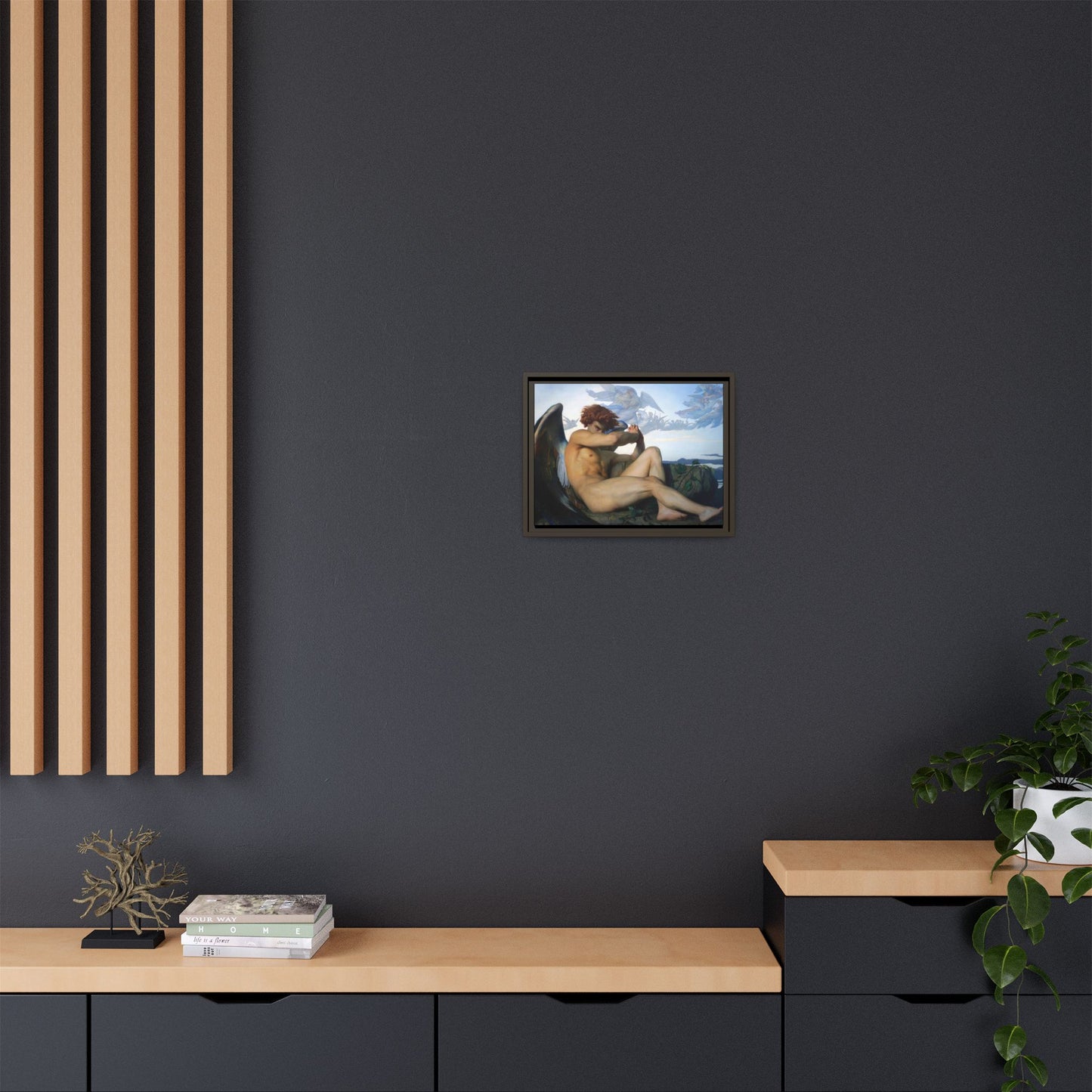
Cabanel, Alexandre - The Fallen Angel (1847) - Matte Canvas, Framed

Cabanel, Alexandre - The Fallen Angel (1847) - Matte Canvas, Framed

Regular price $55
Sale price $55 Regular price
OFF Sold out
Shipping calculated at checkout.

Free shipping to Domestic US addresses!

Vendor

Printify

Sub total

$55
  • American Express
  • Apple Pay
  • Diners Club
  • Discover
  • Google Pay
  • Mastercard
  • PayPal
  • Shop Pay
  • Venmo
  • Visa
View full details
Description

Product Description

Framed Matte Canvas: A Timeless Legacy, Elegantly Bordered

The Masterpieces Collection serves as a bridge to cultural continuity, bringing the depth of art history into the modern sanctuary of your home. By choosing a framed presentation, you elevate these signals of human brilliance from a simple accent to a definitive focal point. This framed matte canvas provides a sophisticated, gallery-ready aesthetic that anchors your space in intentionality and grace.

Eleanor, we understand that finding the perfect frame can often be an overwhelming post-purchase hurdle—one that delays the joy of actually hanging your art. We’ve pre-emptively solved this by pairing our archival-grade canvas with a sustainably sourced pinewood frame. It arrives finished and ready to grace your walls, ensuring that the transition from our studio to your home is effortless and immediately rewarding.

  • Premium Composition: A cotton and polyester composite canvas featuring a specialized proprietary coating that ensures vibrant, eye-catching detail and long-lasting color integrity.
  • Sustainably Sourced: Both the pinewood frame and the internal radial pine stretcher bars are FSC-certified from renewable forests, honoring a commitment to mindful stewardship.
  • Safety and Clarity: Printed with UL-certified Greenguard Gold latex inks, our canvases are non-hazardous, non-toxic, and non-flammable, providing a vivid resonance that is safe for every room in your home.
  • Ready to Hang: Each piece comes with sawtooth hanging hardware already attached, ensuring a seamless installation.
  • Artisan Precision: Our frames are available in four colors to complement your unique decor. Due to the specialized production process, please allow for a slight size deviation tolerance of +/- 1/8" (3.2mm).

Care Instructions

Maintenance is intentionally straightforward to ensure your artwork remains a pristine fixture in your home. If the canvas or frame gathers dust over time, simply wipe it off gently with a clean, damp cloth.

The Story

The Beautiful Heresy of the Fallen

Cabanel did not paint a monster. He painted a hunk. In 1847, while the rest of Paris was preparing to starve or revolt against the July Monarchy, Cabanel was in Rome. He was surrounded by the heavy scent of incense and the ghosts of the Renaissance. He was also bored AF with the safe, sterile nobility expected by the Ecole des Beaux-Arts.

The Fallen Angel is a masterclass in anatomical flex and psychological warfare. Look at the musculature. It’s perfect. It’s classical. It is exactly what the Academy taught. But the jury hated it. Oh, they didn’t hate the technique. They hated the lack of nobility. Cabanel had the audacity to depict Lucifer not as a horned beast, but as a weeping rebel with a single, burning tear of pure rage.

This was dangerously close to heresy. By making the Devil beautiful and tragic, Cabanel humanized the ultimate exile. He captured the electric, crackling silence before an explosion. It was a classical body hiding a modern, revolutionary anger. The jury was shocked because they saw themselves in the shadows. They saw the truth we usually try to hide.

The Academic Rebel

Cabanel eventually became the ultimate insider, and the favorite of Napoleon III. He eventually became a professor at the Ecole des Beaux-Arts and a gatekeeper of the Salon. But in 1847, he was still the defiant student testing the boundaries of the system. This painting was his Second Year Envoy sent back from Rome to prove his progress.

The Academy expected a religious history painting to inspire piety. Instead, Cabanel gave them a portrait of wounded pride. He used the perfection of the human form to represent the deepest of human failures. It remains one of the most striking images of the 19th century because it refuses to make evil ugly. It makes evil look like us on our worst day.

References

Cabanel, Alexandre. The Fallen Angel. 1847. Oil on canvas. Musée Fabre, Montpellier.

Laneyrie-Dagen, Nadeije. The Art of Reading Painting. New York: Larousse, 2002.

Rosenblum, Robert, and H.W. Janson. 19th-Century Art. Revised and updated edition. New York: Harry N. Abrams, 2004.

Weinberg, H. Barbara. The Lure of Paris: Nineteenth-Century American Painters and Their French Teachers. New York: Abbeville Press, 1991.

Shipping & Satisfaction

Shipping & Satisfaction

Free shipping on all US orders, always.

Every order ships to US addresses at no additional cost. Allow up to 10 business days from fulfillment for delivery.

Your investment is protected. Material or print defects are replaced or fully refunded — no friction, no negotiation. If the work doesn't resonate aesthetically within 5 days of receipt, reach out and we'll make it right.

One note worth reading before you order: because every piece is produced on demand, we're unable to accommodate returns for incorrect size selections. Consult the product specs before you commit — they're there to make sure what arrives is exactly what you envisioned.

About your query!