Skip to product information
1 of 3

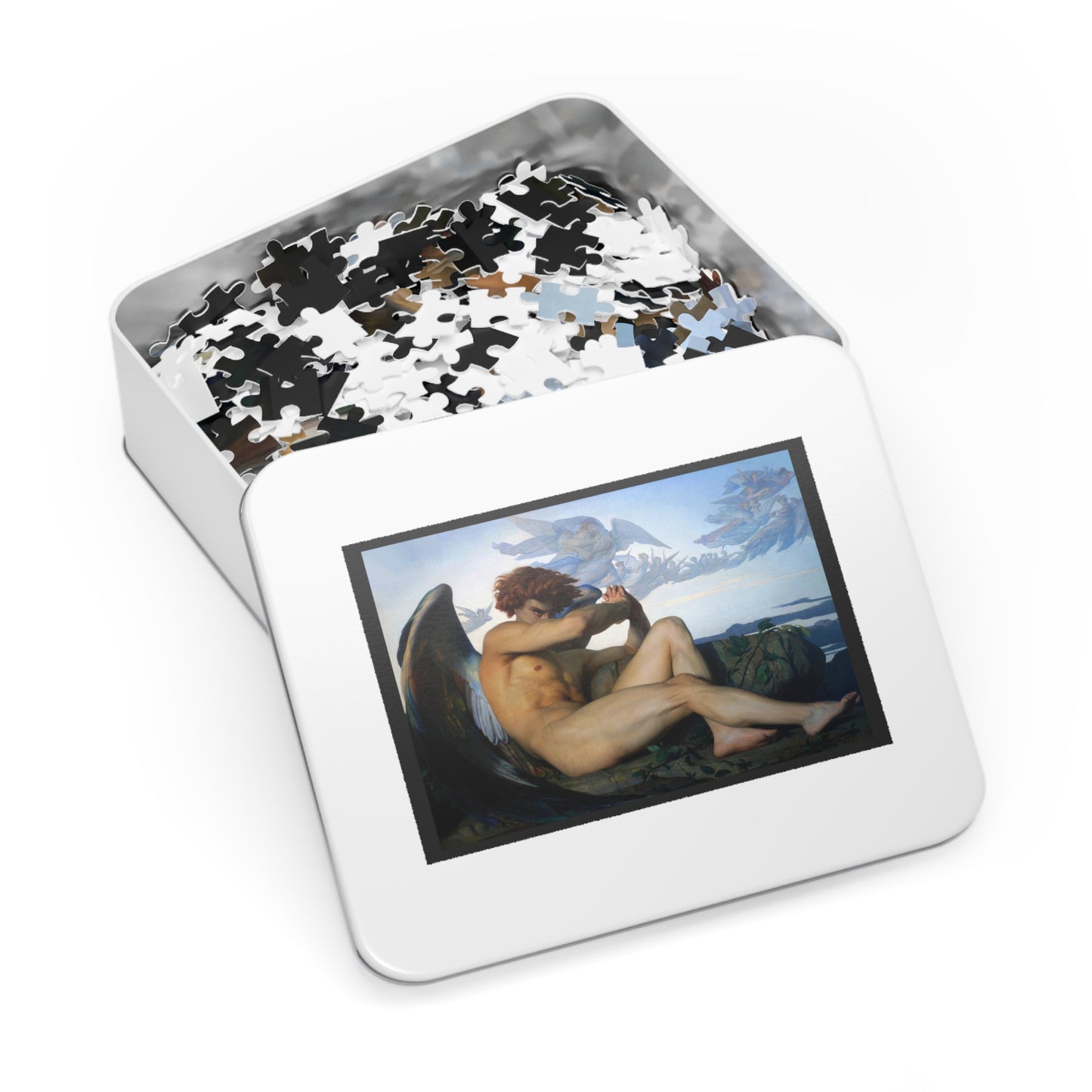
Cabanel's "The Fallen Angel" - 1000pc Jigsaw Puzzle

Cabanel's "The Fallen Angel" - 1000pc Jigsaw Puzzle

Regular price $50
Sale price $50 Regular price
OFF Sold out
Shipping calculated at checkout.

Free shipping to Domestic US addresses!

Vendor

Printify

Sub total

$50
  • American Express
  • Apple Pay
  • Diners Club
  • Discover
  • Google Pay
  • Mastercard
  • PayPal
  • Shop Pay
  • Venmo
  • Visa
View full details
Description

A Masterpiece in Every Piece

The Art History Jigsaw Collection

Reclaim your focus with a tactile journey into art history.

In a world of constant digital notification and blue-light exhaustion, the simple act of assembling a puzzle is a radical return to center. These 1000-piece jigsaws offer more than a cozy group activity; they provide a "flow state" experience that allows you to become intimately acquainted with the brushstrokes and decisions of the world’s greatest artists. As you fit each high-quality chipboard piece into place, you aren't just building an image, you are practicing mindful relaxation and building a deeper connection with a Masterpiece.

Classic Nostalgia Meets Modern Elegance

Every puzzle is housed in a clean, white metal tin that carries a 1950s nostalgic charm, featuring the finished artwork printed directly on the lid. This waterproof tin doesn't just keep your pieces secure. It serves as a sophisticated addition to your bookshelf or coffee table, making it a gift-ready presentation for yourself or a fellow seeker. You can bring the aura of a museum masterpiece into your home in a format that is both approachable and deeply rewarding.

Product Specifications:

  • Scale: 1000 precise-interlocking pieces with a professional glossy finish.

  • Material: High-quality, pre-die-cut chipboard for a satisfying tactile click.

  • Storage: Arrives in a durable white metal tin box featuring the art on the cover.

  • Integrity: Utilizing the latest printing techniques for crisp, vibrant colors that match the historical originals.

The Story

The Beautiful Heresy of the Fallen

Cabanel did not paint a monster. He painted a hunk. In 1847, while the rest of Paris was preparing to starve or revolt against the July Monarchy, Cabanel was in Rome. He was surrounded by the heavy scent of incense and the ghosts of the Renaissance. He was also bored AF with the safe, sterile nobility expected by the Ecole des Beaux-Arts.

The Fallen Angel is a masterclass in anatomical flex and psychological warfare. Look at the musculature. It’s perfect. It’s classical. It is exactly what the Academy taught. But the jury hated it. Oh, they didn’t hate the technique. They hated the lack of nobility. Cabanel had the audacity to depict Lucifer not as a horned beast, but as a weeping rebel with a single, burning tear of pure rage.

This was dangerously close to heresy. By making the Devil beautiful and tragic, Cabanel humanized the ultimate exile. He captured the electric, crackling silence before an explosion. It was a classical body hiding a modern, revolutionary anger. The jury was shocked because they saw themselves in the shadows. They saw the truth we usually try to hide.

The Academic Rebel

Cabanel eventually became the ultimate insider, and the favorite of Napoleon III. He eventually became a professor at the Ecole des Beaux-Arts and a gatekeeper of the Salon. But in 1847, he was still the defiant student testing the boundaries of the system. This painting was his Second Year Envoy sent back from Rome to prove his progress.

The Academy expected a religious history painting to inspire piety. Instead, Cabanel gave them a portrait of wounded pride. He used the perfection of the human form to represent the deepest of human failures. It remains one of the most striking images of the 19th century because it refuses to make evil ugly. It makes evil look like us on our worst day.

References

Cabanel, Alexandre. The Fallen Angel. 1847. Oil on canvas. Musée Fabre, Montpellier.

Laneyrie-Dagen, Nadeije. The Art of Reading Painting. New York: Larousse, 2002.

Rosenblum, Robert, and H.W. Janson. 19th-Century Art. Revised and updated edition. New York: Harry N. Abrams, 2004.

Weinberg, H. Barbara. The Lure of Paris: Nineteenth-Century American Painters and Their French Teachers. New York: Abbeville Press, 1991.

About your query!