Skip to product information
1 of 106

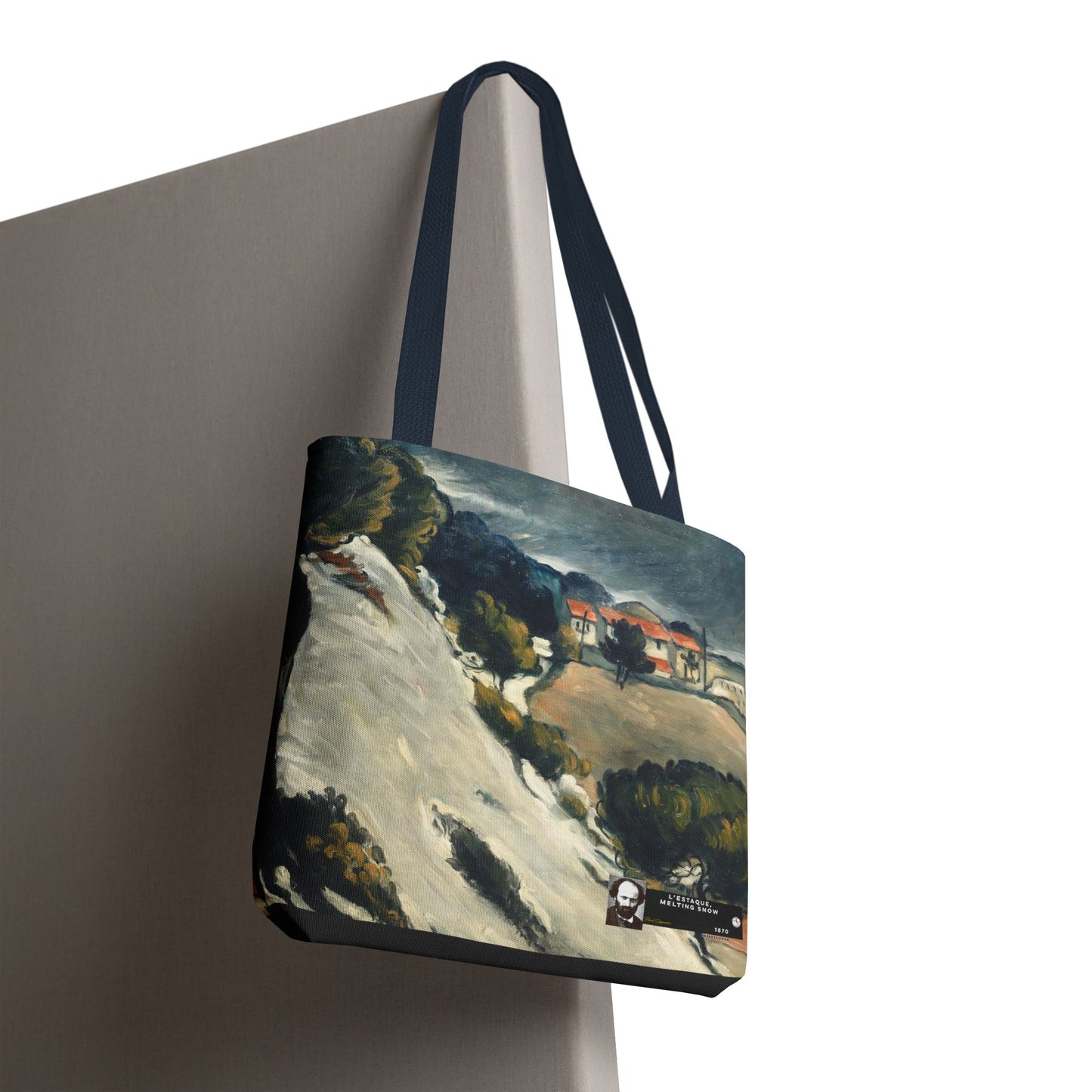
Cézanne, Paul - L’Estaque, Melting Snow (1870) - Tote Bag

Cézanne, Paul - L’Estaque, Melting Snow (1870) - Tote Bag

Regular price $30
Sale price $30 Regular price
OFF Sold out
Shipping calculated at checkout.

Free shipping to Domestic US addresses!

Vendor

Printify

Sub total

$30
  • American Express
  • Apple Pay
  • Diners Club
  • Discover
  • Google Pay
  • Mastercard
  • PayPal
  • Shop Pay
  • Venmo
  • Visa
View full details
Description

The Bag That Goes Everywhere the Work Does

Spun polyester body, cotton webbing handles, nonwoven laminate lining — this tote is built for daily load-bearing, not occasional display. Dye sublimation printing wraps the entire surface, so the image reads the same whether the bag is full or empty. Double-stitched seams and boxed corners give it structure; the five handle color options let the design lead. Available in three sizes. Size tolerance ±¾ inch.

Care Instructions

Empty the bag completely before cleaning. Pretreat any visible stains, then wipe down with warm water, laundry detergent, and a soft cloth or brush. Air dry only — do not machine wash or put in the dryer.

Art Story

The Cold Panic of L'Estaque

France was a powder keg in 1870. The Second Empire was screaming toward a violent end at the hands of the Prussians while Napoleon III sat as a captive. In Paris the streets were preparing for a siege. Paul Cézanne didn't stay to watch the collapse. He fled south to the Mediterranean coast to avoid the draft. He wasn't looking for a vacation. He was hiding.

Melting Snow in L'Estaque is the sound of heavy boots on frozen mud and the sharp crack of a winter branch. The air in the south smelled of wet pine and wood ash. Communication at the time was a mess of telegrams and frantic couriers. The vibe of this canvas is a cold panic disguised as a landscape. While the kingmakers were hiding in their chateaus Cézanne was hacking at a canvas in a single session to vent his isolation.

This isn't the soft light of typical Impressionism. The dark shadows and distorted perspective lean hard toward Expressionism. The thick black outlines anticipate the structural obsession of his later career. He captured the fleeting winter light not with a delicate touch but with the desperate energy of a man outrunning a war. It is a brutal piece of work from his dark period. It proves that even when the world is burning a man with a brush can find a way to scream in silence.

References

Cézanne, P. Letters. Edited by John Rewald. New York: Da Capo Press, 1995.

Rewald, John. The Paintings of Paul Cézanne: A Catalogue Raisonné. New York: Abrams, 1996.

Athanassoglou-Kallmyer, Nina. Cézanne and Provence: A Painter in His Culture. Chicago: University of Chicago Press, 2003.

Danchev, Alex. Cézanne: A Life. New York: Pantheon, 2012.

Shipping & Satisfaction

Shipping & Satisfaction

Free shipping on all US orders, always.

Every order ships to US addresses at no additional cost. Allow up to 10 business days from fulfillment for delivery.

Your investment is protected. Material or print defects are replaced or fully refunded — no friction, no negotiation. If the work doesn't resonate aesthetically within 5 days of receipt, reach out and we'll make it right.

One note worth reading before you order: because every piece is produced on demand, we're unable to accommodate returns for incorrect size selections. Consult the product specs before you commit — they're there to make sure what arrives is exactly what you envisioned.

About your query!