Skip to product information
1 of 93

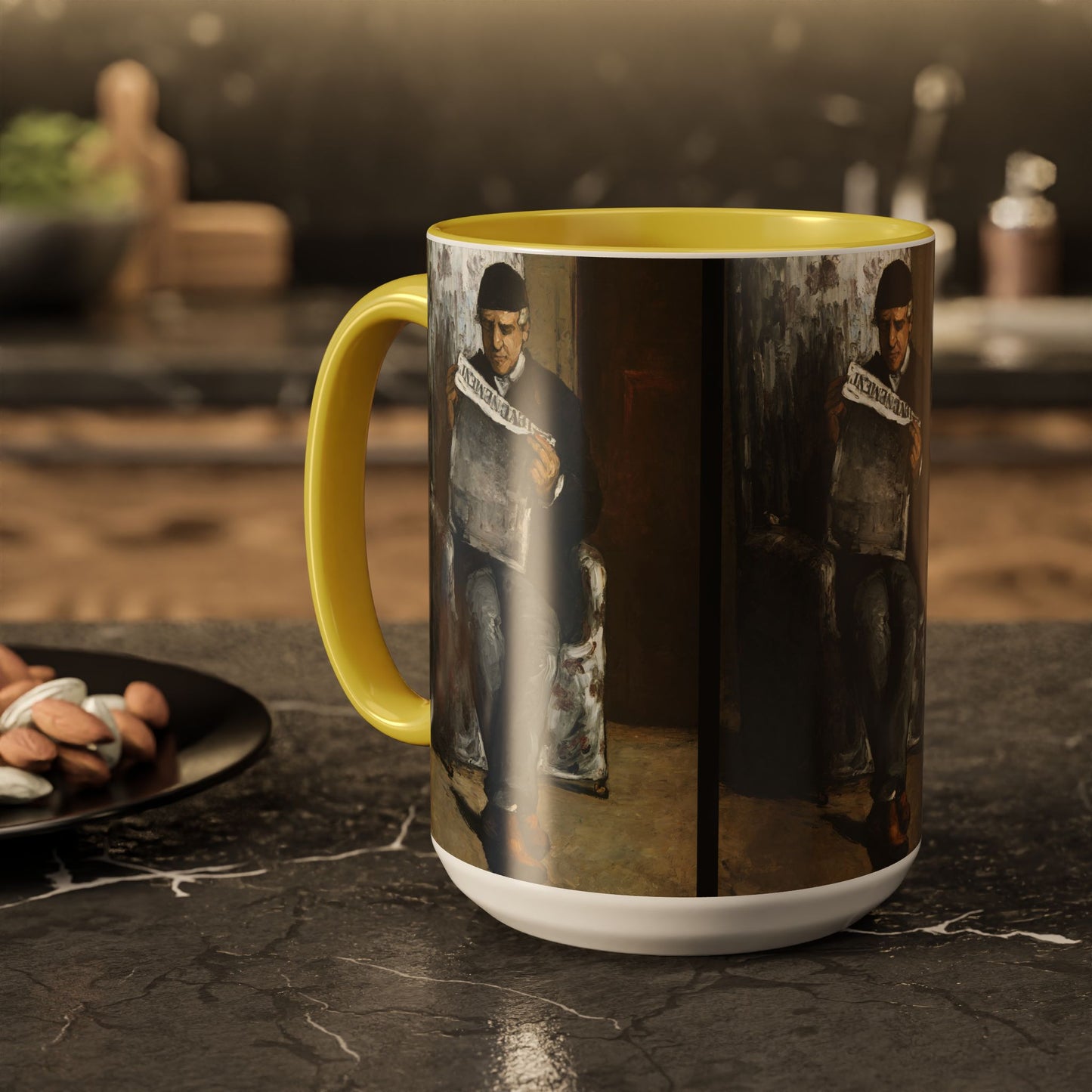
Cézanne, Paul - The Artist’s Father (1866) - Colorful Accent Mugs

Cézanne, Paul - The Artist’s Father (1866) - Colorful Accent Mugs

Regular price $28
Sale price $28 Regular price
OFF Sold out
Shipping calculated at checkout.

Free shipping to Domestic US addresses!

Vendor

Printify

Sub total

$28
  • American Express
  • Apple Pay
  • Diners Club
  • Discover
  • Google Pay
  • Mastercard
  • PayPal
  • Shop Pay
  • Venmo
  • Visa
View full details
Description

Pick a Masterpiece. Or pick a Mandala. Then pick your color and your new favorite mug of wakefulness joins your routine — 12 bright accent options for the handle and interior. Match the dominant palette in the design or run contrast. There are no wrong calls here.

100% glossy ceramic with ORCA coating, which is the professional standard for color that actually holds up after washing. Available in 11oz and 15oz, whatever your morning requires.


  • Material: 100% glossy ceramic, ORCA-coated
  • 12 bright accent color options — handle and interior matched
  • 11oz (0.33 L) / 15oz (0.44 L)
  • Easy-grip C-shaped handle
  • Microwave safe / Dishwasher safe

CARE INSTRUCTIONS

Dishwasher safe. Top rack if you're putting it in. Hand-washing with warm water and dish soap extends the print life. No abrasive scrubbers.

Art Story

The Banker and the Rebel

Paul Cézanne was not interested in painting a flattering portrait of the man who held his purse strings woven into a leash. In 1866, Louis-Auguste Cézanne was a formidable power in Aix-en-Provence. He was a wealthy banker who viewed his son’s artistic ambitions as a professional failure. Paul responded by turning his father into a monument of heavy, plastered oil paint. This was not the delicate brushwork of the Parisian elite. This was an act of artistic masonry.

Cézanne used a palette knife to shove the paint across the canvas like wet mortar. The result is a figure that feels as immovable as a mountain. The elder Cézanne sits in a high-backed chair, buried in a copy of L'Événement. This specific newspaper was a deliberate jab. It was the publication where Émile Zola, Cézanne's childhood friend, was busy tearing down the artistic establishment in print. By placing this radical paper in his father’s hands, Paul was effectively staging a silent coup in the family living room.

The massive scale of the canvas was a middle finger to the Salon. Traditional portraiture of this size was reserved for kings and gods, not grumpy bankers in their slippers. In 1866, the world was moving toward the mechanical speed of photography and the grit of industrialization. Cézanne stayed behind in the quiet tension of the family estate to prove that a painting could be as heavy and permanent as a brick wall. He wasn't just capturing a likeness. He was claiming his territory.

References

National Gallery of Art. The Artist's Father, Reading L'Événement. Washington D.C.

Gowing, Lawrence. Cézanne. Thames & Hudson. 1988.

Rewald, John. The Paintings of Paul Cézanne: A Catalogue Raisonné. Harry N. Abrams. 1996.

Shipping & Satisfaction

Shipping & Satisfaction

Free shipping on all US orders, always.

Every order ships to US addresses at no additional cost. Allow up to 10 business days from fulfillment for delivery.

Your investment is protected. Material or print defects are replaced or fully refunded — no friction, no negotiation. If the work doesn't resonate aesthetically within 5 days of receipt, reach out and we'll make it right.

One note worth reading before you order: because every piece is produced on demand, we're unable to accommodate returns for incorrect size selections. Consult the product specs before you commit — they're there to make sure what arrives is exactly what you envisioned.

About your query!