Skip to product information
1 of 4

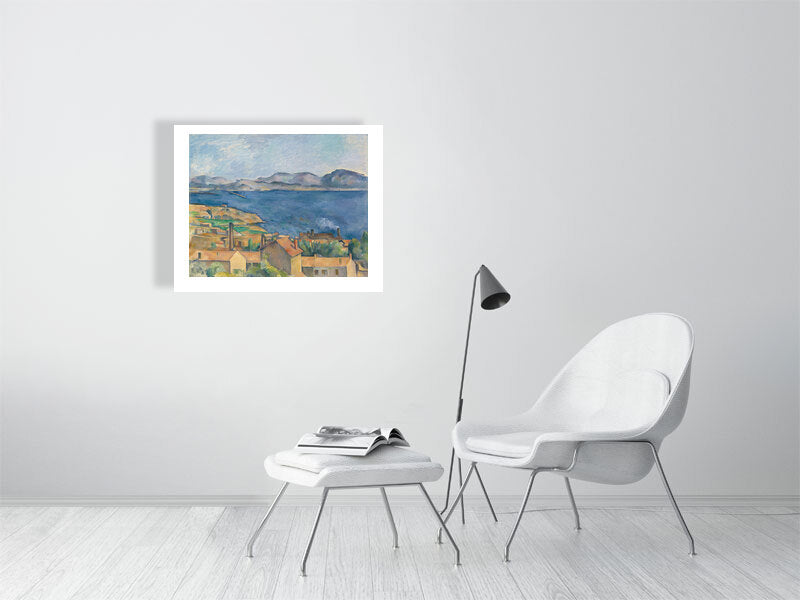
Cézanne, Paul - The Bay of Marseille, Seen from L'Estaque (1885)

Cézanne, Paul - The Bay of Marseille, Seen from L'Estaque (1885)

Regular price $210
Sale price $210 Regular price
OFF Sold out
Shipping calculated at checkout.

Free shipping to Domestic US addresses!

Vendor

AdamPacio.com

Sub total

$210
  • American Express
  • Apple Pay
  • Diners Club
  • Discover
  • Google Pay
  • Mastercard
  • PayPal
  • Shop Pay
  • Venmo
  • Visa
View full details
Description

Selecting a piece of history for your home is an act of curation that reflects your own journey toward clarity and center. This fine art giclée is more than a reproduction; it is a high-fidelity window into the Modern Art Canon, produced with the technical precision required for professional gallery display. By prioritizing archival materials and local Brooklyn craftsmanship, we ensure that the intellectual resonance of the artwork is matched by its physical presence in your space.

Every print is designed to provide a sense of lasting value and quiet confidence. This is an investment in your environment, an invitation to replace the noise of modern life with the enduring narrative of the great innovators. Whether displayed as a single focal point or as part of a larger historical survey, these prints provide the tactile and visual aura that only genuine museum-grade materials can deliver.

Museum-Quality Craftsmanship

The Paper: 100% cotton Hahnemühle Photo Rag, world-renowned for its beautiful felt structure and archival longevity.

The Print: Genuine Giclée process using pigment-based inks for depth, detail, and an "aura" that rivals museum originals.

The Production: Printed locally in NYC to ensure the highest standards of color accuracy and material integrity.

The Story

The Architecture of the Sea

Cezanne went to L'Estaque in 1870 to dodge the draft during the Franco-Prussian War. While the rest of France was collapsing into military chaos, Cezanne was staring at the Mediterranean until his eyes burned. He wasn't interested in the hazy, flickering light that obsessed Monet. He wanted something that would last. He wanted to make Impressionism as solid as the artwork itself in the museums.

In this 1885 masterpiece, the water isn't a liquid surface reflecting the sky. It is a massive, architectural block of deep blue. It has weight. It has gravity. You can see the industrial age creeping into the frame. A lone chimney in the foreground acts as a vertical anchor against the vast horizontal stretch of the bay. It is a visual reminder that the olive groves of Provence were being choked by smokestacks and the relentless progress of the railway.

The world was changing fast. The telegraph was shrinking the globe and Nietzsche was busy declaring the death of God. Cezanne responded to this frantic energy by slowing everything down, reducing the landscape to a series of cylinders, spheres, and cones. The critics in Paris hated it. They said his paintings looked more like maps than art. They were wrong. He was actually inventing the future. This isn't just a view of a bay. It is a moment of brutal clarity that paved the way for every modern artist who followed.

References

Gowing, Lawrence. Cezanne. Thames & Hudson, 1988.

Rewald, John. The Paintings of Paul Cezanne: A Catalogue Raisonne. Harry N. Abrams, 1996.

Shiff, Richard. Cezanne and the End of Impressionism. University of Chicago Press, 1984.

Verdi, Richard. Cezanne. Thames & Hudson, 1992.

About your query!