Skip to product information
1 of 4

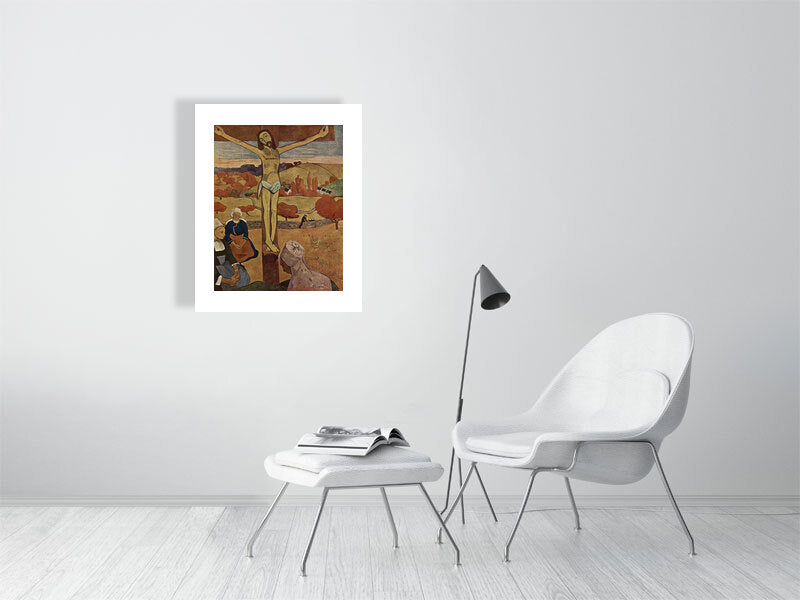
Gauguin, Paul - The Yellow Christ (1889)

Gauguin, Paul - The Yellow Christ (1889)

Regular price $210
Sale price $210 Regular price
OFF Sold out
Shipping calculated at checkout.

Free shipping to Domestic US addresses!

Vendor

AdamPacio.com

Sub total

$210
  • American Express
  • Apple Pay
  • Diners Club
  • Discover
  • Google Pay
  • Mastercard
  • PayPal
  • Shop Pay
  • Venmo
  • Visa
View full details
Description

Selecting a piece of history for your home is an act of curation that reflects your own journey toward clarity and center. This fine art giclée is more than a reproduction; it is a high-fidelity window into the Modern Art Canon, produced with the technical precision required for professional gallery display. By prioritizing archival materials and local Brooklyn craftsmanship, we ensure that the intellectual resonance of the artwork is matched by its physical presence in your space.

Every print is designed to provide a sense of lasting value and quiet confidence. This is an investment in your environment, an invitation to replace the noise of modern life with the enduring narrative of the great innovators. Whether displayed as a single focal point or as part of a larger historical survey, these prints provide the tactile and visual aura that only genuine museum-grade materials can deliver.

Museum-Quality Craftsmanship

The Paper: 100% cotton Hahnemühle Photo Rag, world-renowned for its beautiful felt structure and archival longevity.

The Print: Genuine Giclée process using pigment-based inks for depth, detail, and an "aura" that rivals museum originals.

The Production: Printed locally in NYC to ensure the highest standards of color accuracy and material integrity.

The Story

Paul Gauguin didn't move to Brittany for the scenery. He went there because he was done with the light-dappled fluff of the Impressionists and the cold iron of the Eiffel Tower. In 1889, while Paris was worshiping electricity and steam at the Exposition Universelle, Gauguin was standing in the mud of Pont-Aven. He was looking for something ancient. He wanted a primitive soul that the modern world had already started to execute.

The Yellow Christ is not a portrait of a Sunday service. It is a manifesto of Cloisonnism. Gauguin rejected naturalism by drenching the world in a flat, unapologetic yellow. He didn't care if the grass looked like a real field. He wanted it to feel like the autumn transition between life and the coming winter. The Christ figure wasn't a vision from the clouds either. It was modeled after a 17th-century wooden crucifix he found in a local chapel in Tremalo.

The heavy dark outlines around the figures mimic medieval stained glass and Japanese woodblock prints. It is a flattened, spiritual space where peasant women in traditional coifs pray to a wooden idol that has come to life in their own fields. While the rest of the world was staring at the raw power of the new century, Gauguin was obsessing over ancient superstitions and the smell of heavy wool soaked in rain. He saw the death of the sacred coming and he tried to trap it on a canvas before it vanished forever.

References

Gauguin, Paul. The Writings of a Savage. Edited by Daniel Guérin. New York: Viking Press, 1978.

Thomson, Belinda. Gauguin. London: Thames & Hudson, 1987.

Brettell, Richard. The Art of Paul Gauguin. Washington: National Gallery of Art, 1988.

Eisenman, Stephen. Gauguin's Skirt. London: Thames & Hudson, 1997.

About your query!