Skip to product information
1 of 28

Manet, Édouard - The Balcony (1868) - Suitcase

Manet, Édouard - The Balcony (1868) - Suitcase

Regular price $225
Sale price $225 Regular price
OFF Sold out
Shipping calculated at checkout.

Free shipping to Domestic US addresses!

Vendor

Printify

Sub total

$225
  • American Express
  • Apple Pay
  • Diners Club
  • Discover
  • Google Pay
  • Mastercard
  • PayPal
  • Shop Pay
  • Venmo
  • Visa
View full details
Description

The Masterpiece Hard-Shell Travel Case

Curated Movement for the Intentional Traveler.

Art in Motion

Travel is often a series of transitions through noisy, crowded spaces. This hard-shell suitcase from the Masterpieces Collection ensures that your personal aesthetic remains uninterrupted, even on the move. Featuring high-resolution art history masterpieces encapsulated within a durable polycarbonate shell, this case transforms a practical necessity into a mobile statement of heritage and style.

Resilient Sophistication

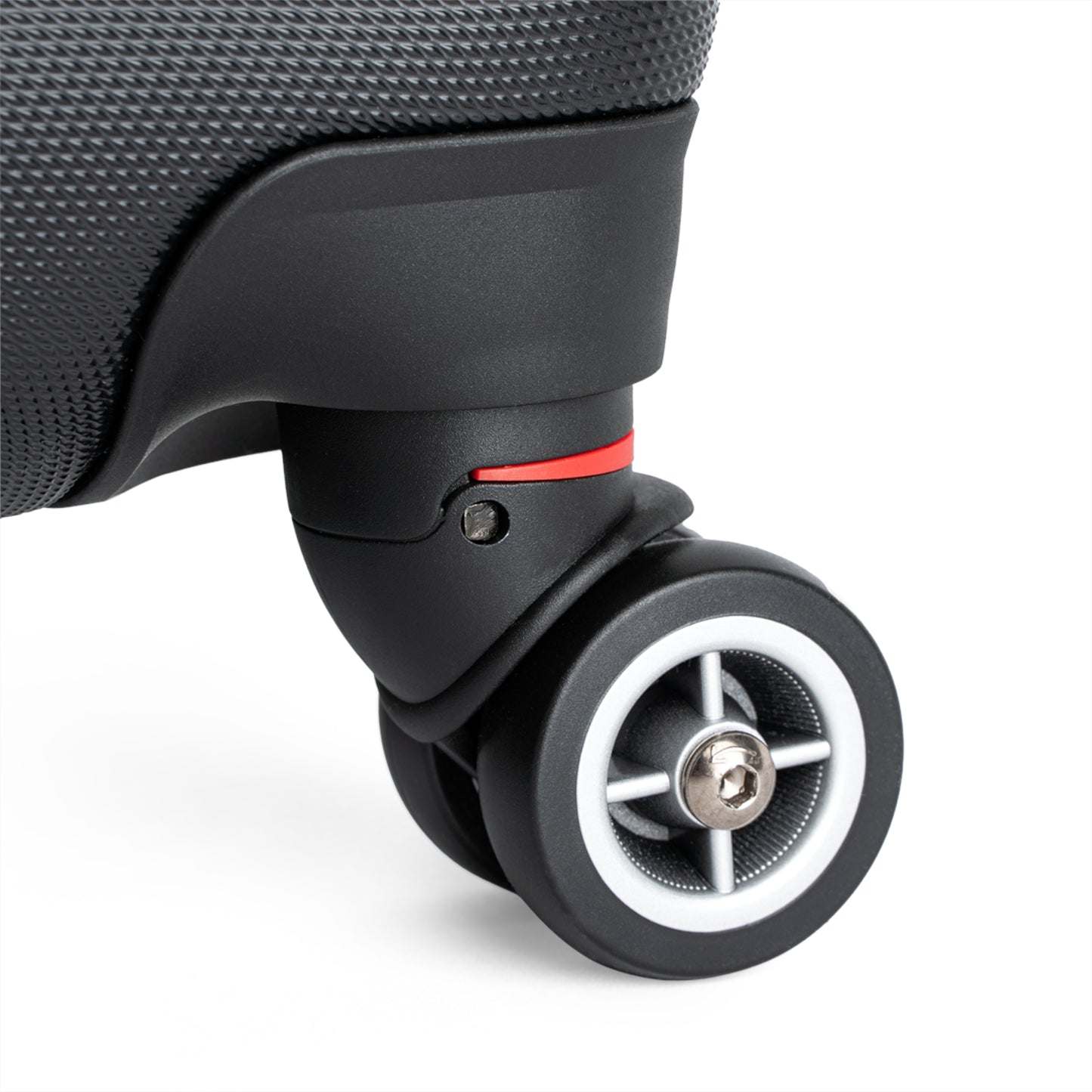
Designed for those who value both form and function, the case utilizes a hybrid construction: a high-impact polycarbonate front to protect the artwork and a lightweight ABS back for scratch and temperature resistance. The 360° swivel double-wheels and adjustable telescopic handle ensure effortless, silent movement through any environment, allowing you to maintain your peace and your pace.

Intelligent Interior

The interior is designed for the mindful organizer. Featuring a removable lining under a secure rubber seal and dedicated inner pockets, it provides the structure needed to keep your essentials in order. For longer journeys, the largest size offers an expandable storage option, ensuring you never have to compromise on what you carry with you.


Technical Features

  • Construction: High-impact Polycarbonate front with a durable, scratch-resistant ABS back.
  • Movement: Four 360° swivel double-wheels for silent, multi-directional gliding.
  • Security: Built-in TSA-compliant lock for enhanced peace of mind.
  • Interior: Removable inner lining and dual internal pockets for organized storage.
  • Aesthetic Note: To achieve the highest possible resolution, the artwork is printed on a specialized canvas and encapsulated within the PC shell. Please note that this artisan process may result in slight, organic creasing near the suitcase's edges—a hallmark of the unique technology used to merge fine art with high-durability travel gear.

      Small Medium Large
    Height (with wheels), in 22.00 26.00 30.00
    Length, in 9.00 10.00 11.00
    Width, in 14.00 18.00 20.00
    Handle Length, in 15.00 18.50 22.00
     

Care & Maintenance

To preserve the brilliance of your travel case, please follow these care guidelines:

  • Preparation: Remove all items from the case before cleaning.
  • Surface Care: For visible stains or scuffs, pretreat the area with a mild stain remover.
  • Cleaning: Mix warm water with a gentle laundry detergent. Use a soft terry cloth or a soft-bristle brush to clean the outer shell and handles.
  • Drying: Always allow the case to air dry completely before storage or use.
The Story

The Stagnant, Beautiful Void

Manet didn't paint a family portrait. He painted a psychological disconnection.

In 1869, the Paris Salon was looking for heroism and clear stories. Manet gave them three people staring into different corners of the universe while standing on the same rug. It was a snapshot of the new Parisian reality. Baron Haussmann had just finished ripping up the old city to create wide boulevards. These new balconies became private theater boxes. You could watch the street-level drama without ever getting your boots dirty.

The woman seated in the foreground is Berthe Morisot. This was her debut in Manet’s work. She would eventually become his favorite muse and his sister-in-law. She looks haunted. Next to her, Fanny Claus and Antoine Guillemet look equally bored. None of them are looking at each other. They are perfectly dressed and profoundly alone. Critics at the time hated it. They called the viridian green of the shutters "distressing" and "uncooked." They wanted a narrative. Manet gave them the metallic tang of iron railings and the silence of the upper-middle class.

This is Proto-Impressionism at its most cynical. The figures are cut off by the frame like a photograph. The light is flat. The shadows are deep and unapologetic. Manet wasn't trying to be pretty. He was capturing the terminal velocity of the Second Empire. It was a golden age of fashion built on a foundation of paranoia.

References

  • Brombert, B. A. (1996). Edouard Manet: Rebel in a Velvet Coat. University of Chicago Press.
  • Clark, T. J. (1984). The Painting of Modern Life: Paris in the Art of Manet and his Followers. Alfred A. Knopf.
  • Nerret, G. (2003). Édouard Manet: 1832-1883: The First of the Moderns. Taschen.
  • Orsay Museum. (n.d.). Édouard Manet: Le Balcon. Musée d’Orsay Collections Database.
Shipping & Satisfaction

Shipping & Satisfaction

Free shipping on all US orders, always.

Every order ships to US addresses at no additional cost. Allow up to 10 business days from fulfillment for delivery.

Your investment is protected. Material or print defects are replaced or fully refunded — no friction, no negotiation. If the work doesn't resonate aesthetically within 5 days of receipt, reach out and we'll make it right.

One note worth reading before you order: because every piece is produced on demand, we're unable to accommodate returns for incorrect size selections. Consult the product specs before you commit — they're there to make sure what arrives is exactly what you envisioned.

About your query!