Skip to product information
1 of 4

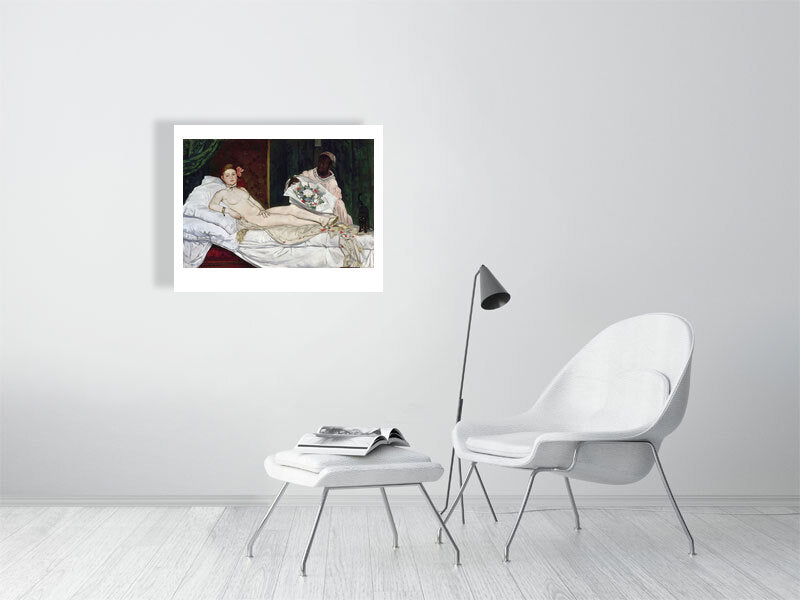
Manet - Olympia (1870)

Manet - Olympia (1870)

Regular price $210
Sale price $210 Regular price
OFF Sold out
Shipping calculated at checkout.

Free shipping to Domestic US addresses!

Vendor

AdamPacio.com

Sub total

$210
  • American Express
  • Apple Pay
  • Diners Club
  • Discover
  • Google Pay
  • Mastercard
  • PayPal
  • Shop Pay
  • Venmo
  • Visa
View full details
Description

Selecting a piece of history for your home is an act of curation that reflects your own journey toward clarity and center. This fine art giclée is more than a reproduction; it is a high-fidelity window into the Modern Art Canon, produced with the technical precision required for professional gallery display. By prioritizing archival materials and local Brooklyn craftsmanship, we ensure that the intellectual resonance of the artwork is matched by its physical presence in your space.

Every print is designed to provide a sense of lasting value and quiet confidence. This is an investment in your environment, an invitation to replace the noise of modern life with the enduring narrative of the great innovators. Whether displayed as a single focal point or as part of a larger historical survey, these prints provide the tactile and visual aura that only genuine museum-grade materials can deliver.

Museum-Quality Craftsmanship

The Paper: 100% cotton Hahnemühle Photo Rag, world-renowned for its beautiful felt structure and archival longevity.

The Print: Genuine Giclée process using pigment-based inks for depth, detail, and an "aura" that rivals museum originals.

The Production: Printed locally in NYC to ensure the highest standards of color accuracy and material integrity.

The Story

The Goddess of the Gutter

In 1865, the Paris Salon needed guards to protect a piece of fabric from being shredded by umbrellas. The culprit was Édouard Manet. He didn’t paint a goddess or a nymph, he painted a girl named Victorine Meurent and called her Olympia. In the coded language of the Second Empire, that name was a professional title for a high-end sex worker.

Manet took the idealized nude—the soft, distant Venus of the Renaissance—and stripped away the mythology. He replaced the traditional dog of fidelity with a black cat, back arched and tail up. He traded the glowing, diffused light of the old masters for a harsh, flat glare that looked like a surgical strike.

The scandal wasn't just about the skin. It was about the stare. Olympia isn't a passive object waiting to be admired. She looks directly at the viewer with the cold, calculating eyes of a woman running a business. She is in a room thick with the smell of industrial coal smoke and expensive floral perfume.

One slipper dangles from her foot. It was a visual shorthand for lost innocence in 19th-century slang. A Black servant brings a bouquet from a client, but Olympia doesn't even look at the flowers. She is looking at you. Manet forced the bourgeois "Kingmakers" of Paris to look at the very woman they spent their nights with but pretended not to know in the morning. He didn't just paint a nude. He held up a mirror to a city that had traded its soul for a stock market.

References

Clark, T.J. The Painting of Modern Life: Paris in the Art of Manet and his Followers. Princeton University Press, 1984.

Brombert, Beth Archer. Edouard Manet: Rebel in a Frock Coat. University of Chicago Press, 1997.

Needham, Gerald. "The Painting of Modern Life." Art Journal, Vol. 45, No. 1, 1985.

Reff, Theodore. Manet: Olympia. Viking Press, 1976.

About your query!