Skip to product information
1 of 6

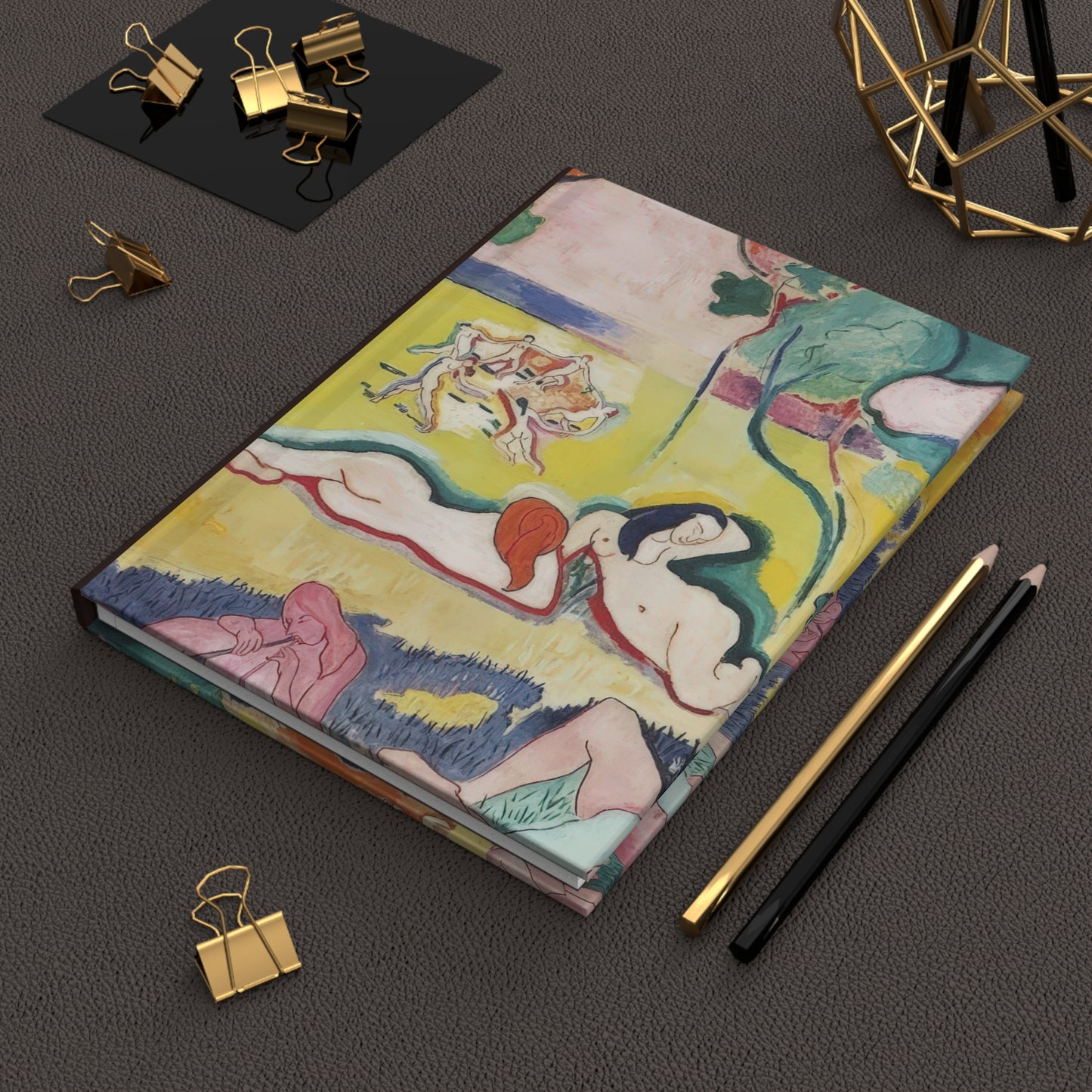
Matisse, Henri - The Joy of Life (1905) - Hardcover Journal Matte

Matisse, Henri - The Joy of Life (1905) - Hardcover Journal Matte

Regular price $28
Sale price $28 Regular price
OFF Sold out
Shipping calculated at checkout.

Free shipping to Domestic US addresses!

Vendor

Printify

Sub total

$28
  • American Express
  • Apple Pay
  • Diners Club
  • Discover
  • Google Pay
  • Mastercard
  • PayPal
  • Shop Pay
  • Venmo
  • Visa
View full details
Description

The journal that doesn't look like everyone else's.

Hardcover, matte laminate, full wraparound print. The things you reach for every day should reflect the space you're building for yourself, not default to whatever was on the shelf. A journal printed with art you chose is a small decision that quietly resets the tone every time you open it.

Inside: 150 lined pages on a sewn casewrap spine that flexes without cracking. Pages are perforated if you need to pull one clean. One size: 5.75" × 8".

Care Instructions

Wipe the cover gently with a soft, dry cloth, moving from the center outward. Keep away from prolonged moisture.

Art Story

The Color of Oranges and Blood

Matisse didn't care if the grass was green or the sky was blue. He painted a world that felt like a fever dream because he was tired of the grey sludge of reality. It was 1905. The air in Paris was thick with coal smoke and the dying gasps of the old century. Matisse responded with a canvas that looked like it had been set on fire.

He called it Le Bonheur de vivre. The public called it a disaster. When it debuted at the 1906 Salon des Indépendants people didn't just walk past it. They laughed. They shouted. One critic saw the screaming yellows and the impossible pinks and called Matisse and his friends ‘wild beasts’, or ‘fauves’. That was how Fauvism was born. Not in a boardroom. Not in a manifesto. It started with a riot in a gallery.

The painting is a pastoral scene from a myth that never happened. People are dancing and lounging in a landscape where the colors act like drums instead of background noise. It is a massive thing. Nearly eight feet wide. It was enough to make a young Pablo Picasso lose his mind with jealousy. He looked at Matisse's success and decided he had to break every rule left standing just to catch up. He painted his first Cubist nightmare specifically to bury this work.

Matisse wasn't trying to be pretty. He was trying to be honest about how a feeling looks when you strip away the polite lies of perspective. It was radical then. It still feels dangerous now. It is a reminder that sometimes you have to burn the garden down to see what is actually growing there.

References

Barr, Alfred H. Matisse. His Art and His Public. New York: The Museum of Modern Art, 1951.

Elderfield, John. The Fauve Landscape. New York: Abbeville Press, 1990.

Shipping & Satisfaction

Shipping & Satisfaction

Free shipping on all US orders, always.

Every order ships to US addresses at no additional cost. Allow up to 10 business days from fulfillment for delivery.

Your investment is protected. Material or print defects are replaced or fully refunded — no friction, no negotiation. If the work doesn't resonate aesthetically within 5 days of receipt, reach out and we'll make it right.

One note worth reading before you order: because every piece is produced on demand, we're unable to accommodate returns for incorrect size selections. Consult the product specs before you commit — they're there to make sure what arrives is exactly what you envisioned.

About your query!