Skip to product information
1 of 4

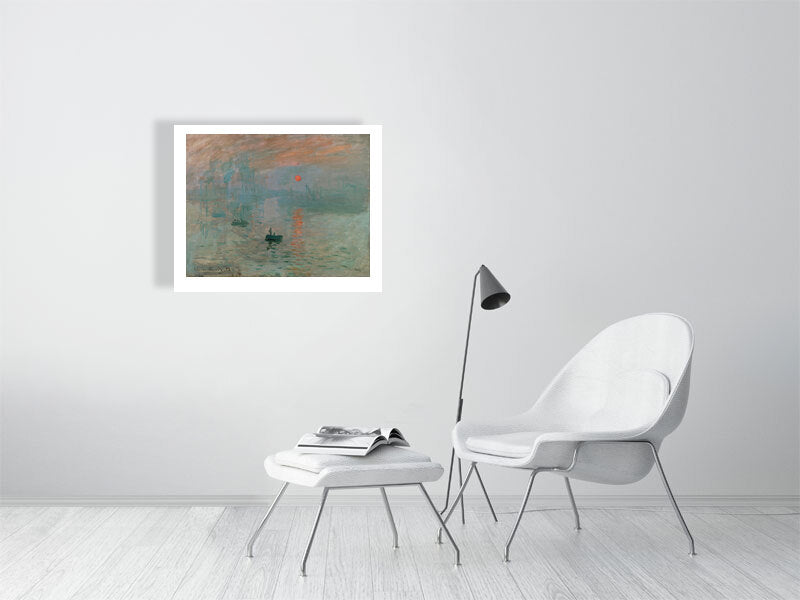
Monet - Impression, Sunrise (1872)

Monet - Impression, Sunrise (1872)

Regular price $210
Sale price $210 Regular price
OFF Sold out
Shipping calculated at checkout.

Free shipping to Domestic US addresses!

Vendor

AdamPacio.com

Sub total

$210
  • American Express
  • Apple Pay
  • Diners Club
  • Discover
  • Google Pay
  • Mastercard
  • PayPal
  • Shop Pay
  • Venmo
  • Visa
View full details
Description

Selecting a piece of history for your home is an act of curation that reflects your own journey toward clarity and center. This fine art giclée is more than a reproduction; it is a high-fidelity window into the Modern Art Canon, produced with the technical precision required for professional gallery display. By prioritizing archival materials and local Brooklyn craftsmanship, we ensure that the intellectual resonance of the artwork is matched by its physical presence in your space.

Every print is designed to provide a sense of lasting value and quiet confidence. This is an investment in your environment, an invitation to replace the noise of modern life with the enduring narrative of the great innovators. Whether displayed as a single focal point or as part of a larger historical survey, these prints provide the tactile and visual aura that only genuine museum-grade materials can deliver.

Museum-Quality Craftsmanship

The Paper: 100% cotton Hahnemühle Photo Rag, world-renowned for its beautiful felt structure and archival longevity.

The Print: Genuine Giclée process using pigment-based inks for depth, detail, and an "aura" that rivals museum originals.

The Production: Printed locally in NYC to ensure the highest standards of color accuracy and material integrity.

The Story

The Birth of a Slur

In 1874, a group of fed-up painters staged their own show in a photographer’s old studio. They were done waiting for the gatekeepers of the Paris Salon to validate them. Claude Monet hung a small, hazy canvas of the Le Havre harbor. He called it Impression, Sunrise because calling it a View would have implied a level of finished detail the painting intentionally lacked.

The critics weren't impressed. Louis Leroy used the title to mock the work, claiming even wallpaper in its embryonic state was more finished than this. He coined the term Impressionism as an insult. He thought he was burying them, but he gave the most important movement in modern art its name.

The painting is a record of a reconstructed nation. France was still reeling from the Prussian siege. Monet didn't paint a pristine nature scene. He painted a forest of industrial cranes and steam-funnels. It is a world of coal soot and wet timber.

There is a scientific ghost in the center of the canvas. The orange sun has the exact same luminance as the gray sky surrounding it. If you stripped the color away, the sun would simply disappear into the clouds. This wasn't about a literal sun. It was about the flicker of a single second in a world that was suddenly moving too fast for traditional brushes to keep up.

References

  • House, J. (2004). Impressionism: Paint and Politics. Yale University Press.
  • Livingstone, M. S. (2002). Vision and Art: The Biology of Seeing. Abrams.
  • Rewald, J. (1973). The History of Impressionism. Museum of Modern Art.
  • Tucker, P. H. (1984). Claude Monet: Life and Art. Yale University Press.
About your query!