Skip to product information
1 of 4

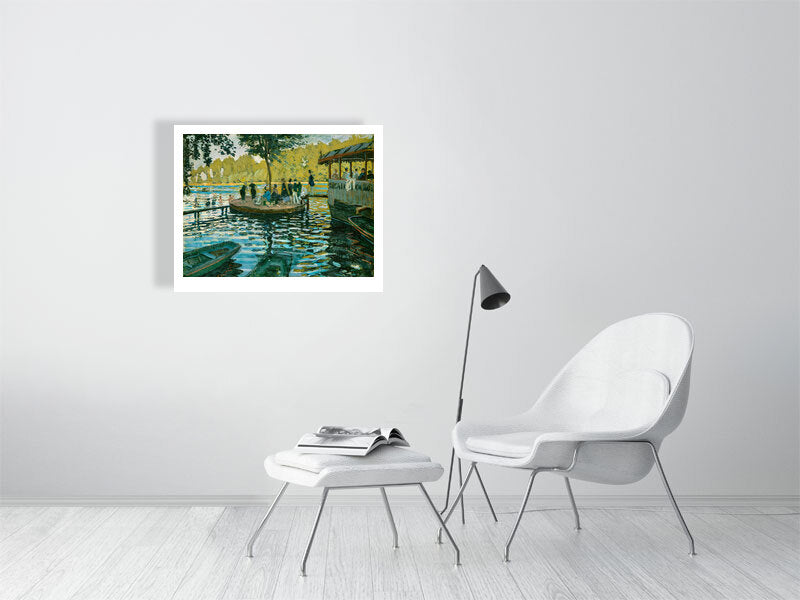
Monet - La Grenouillére (1869)

Monet - La Grenouillére (1869)

Regular price $210
Sale price $210 Regular price
OFF Sold out
Shipping calculated at checkout.

Free shipping to Domestic US addresses!

Vendor

AdamPacio.com

Sub total

$210
  • American Express
  • Apple Pay
  • Diners Club
  • Discover
  • Google Pay
  • Mastercard
  • PayPal
  • Shop Pay
  • Venmo
  • Visa
View full details
Description

Selecting a piece of history for your home is an act of curation that reflects your own journey toward clarity and center. This fine art giclée is more than a reproduction; it is a high-fidelity window into the Modern Art Canon, produced with the technical precision required for professional gallery display. By prioritizing archival materials and local Brooklyn craftsmanship, we ensure that the intellectual resonance of the artwork is matched by its physical presence in your space.

Every print is designed to provide a sense of lasting value and quiet confidence. This is an investment in your environment, an invitation to replace the noise of modern life with the enduring narrative of the great innovators. Whether displayed as a single focal point or as part of a larger historical survey, these prints provide the tactile and visual aura that only genuine museum-grade materials can deliver.

Museum-Quality Craftsmanship

The Paper: 100% cotton Hahnemühle Photo Rag, world-renowned for its beautiful felt structure and archival longevity.

The Print: Genuine Giclée process using pigment-based inks for depth, detail, and an "aura" that rivals museum originals.

The Production: Printed locally in NYC to ensure the highest standards of color accuracy and material integrity.

The Story

The Birth of the Broken Stroke

Monet was starving when he sat down at the edge of the Seine in 1869. He had no money for food or candles to see at night. He was painting on stolen time between the hounding of his creditors. Beside him sat Renoir. Together, they weren't trying to make pretty pictures for a gallery wall. They were trying to solve a technical crisis.

Photography had already mastered the stillness of the trees. It could not capture the rippling, liquid chaos of the river. To beat the camera, Monet had to invent a new visual shorthand. He stopped painting objects and started painting the vibration of the present moment. He used slabs of color to represent light hitting the water. These nearly identical compositions by the two friends birthed the Impressionist broken stroke.

The location was La Grenouillère, or the Frog Pond. It was a hedonistic resort where the air smelled of river silt and cheap white wine. The name was a jab at the unescorted women who frequented the floating pontoons. This canvas was actually a sketch for a massive Salon piece that Monet never finished. It captures the final summer of the Second Empire before the Prussian war wiped the era away. It is a world of transience where the flicker of light matters more than the anatomy of the swimmers.

References

  • Herbert, Robert L. Impressionism: Art, Leisure, and Parisian Society. Yale University Press, 1988.
  • Kendall, Richard. Monet by Himself. Macdonald & Co, 1989.
  • The Metropolitan Museum of Art. Bain à la Grenouillère. Catalog Entry, Accession Number 29.100.112.
  • Wildenstein, Daniel. Monet: or the Triumph of Impressionism. Taschen, 1996.
About your query!