Skip to product information
1 of 4

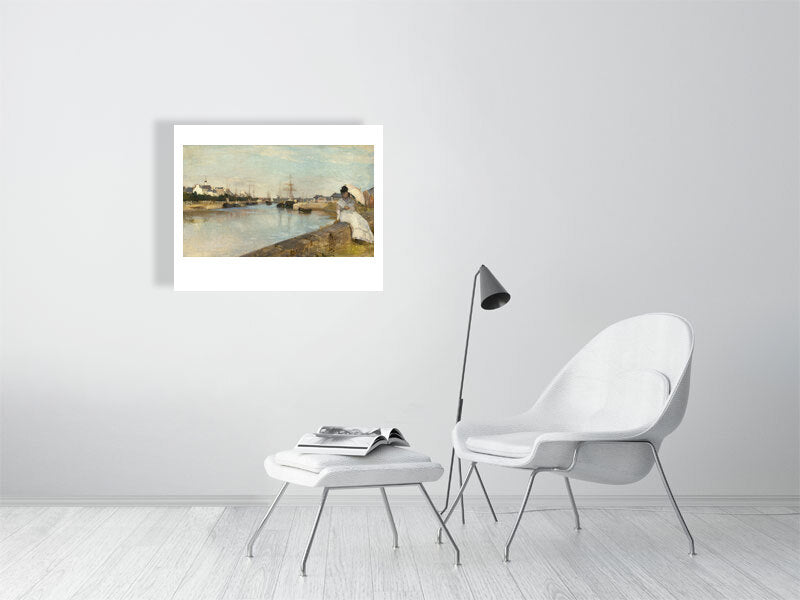
Morisot - The Harbor at Lorient (1869)

Morisot - The Harbor at Lorient (1869)

Regular price $210
Sale price $210 Regular price
OFF Sold out
Shipping calculated at checkout.

Free shipping to Domestic US addresses!

Vendor

AdamPacio.com

Sub total

$210
  • American Express
  • Apple Pay
  • Diners Club
  • Discover
  • Google Pay
  • Mastercard
  • PayPal
  • Shop Pay
  • Venmo
  • Visa
View full details
Description

Selecting a piece of history for your home is an act of curation that reflects your own journey toward clarity and center. This fine art giclée is more than a reproduction; it is a high-fidelity window into the Modern Art Canon, produced with the technical precision required for professional gallery display. By prioritizing archival materials and local Brooklyn craftsmanship, we ensure that the intellectual resonance of the artwork is matched by its physical presence in your space.

Every print is designed to provide a sense of lasting value and quiet confidence. This is an investment in your environment, an invitation to replace the noise of modern life with the enduring narrative of the great innovators. Whether displayed as a single focal point or as part of a larger historical survey, these prints provide the tactile and visual aura that only genuine museum-grade materials can deliver.

Museum-Quality Craftsmanship

The Paper: 100% cotton Hahnemühle Photo Rag, world-renowned for its beautiful felt structure and archival longevity.

The Print: Genuine Giclée process using pigment-based inks for depth, detail, and an "aura" that rivals museum originals.

The Production: Printed locally in NYC to ensure the highest standards of color accuracy and material integrity.

The Story

The Last Summer of the Second Empire

In 1869, the world was vibrating with a nervous, gilded energy. Paris was a construction site of Haussmann’s making, all dust and straight lines. Berthe Morisot fled the noise for the salt air of Brittany. She stood on the edge of the Atlantic and painted the water as it actually looked, not how the Academy demanded it appear.

The Harbor at Lorient is a quiet defiance. While the art world’s kingmakers obsessed over dark, heavy historical dramas, Morisot used a palette of light and air. She placed her sister, Edma, on the harbor wall like a modern fashion anchor against the vastness of the sea. Edma sits in crisp white silk, a stark contrast to the rough stone and tidal mud. It is a snapshot of bourgeois innocence captured just before the Prussian army arrived to turn the Seine red.

Morisot was chasing the fleeting impression of light on moving water years before Monet made it a movement. She was so successful that Édouard Manet, the enfant terrible of the era, begged her for the canvas. She eventually gave it to him as a gift. This painting was one of the last avant-garde works accepted by the Paris Salon before the Franco-Prussian War changed everything. It remains a testament to a woman who saw the future of art while everyone else was looking backward.

References

  • Adler, K., & Garb, T. (1987). Berthe Morisot. Cornell University Press.
  • Higonnet, A. (1995). Berthe Morisot. University of California Press.
  • National Gallery of Art. (2024). The Harbor at Lorient, 1869. NGA Online Collections.
  • Rey, J. D. (1982). Berthe Morisot. Flammarion.
  • Shennan, M. (1996). Berthe Morisot: The First Lady of Impressionism. Sutton Publishing.
About your query!