Skip to product information
1 of 4

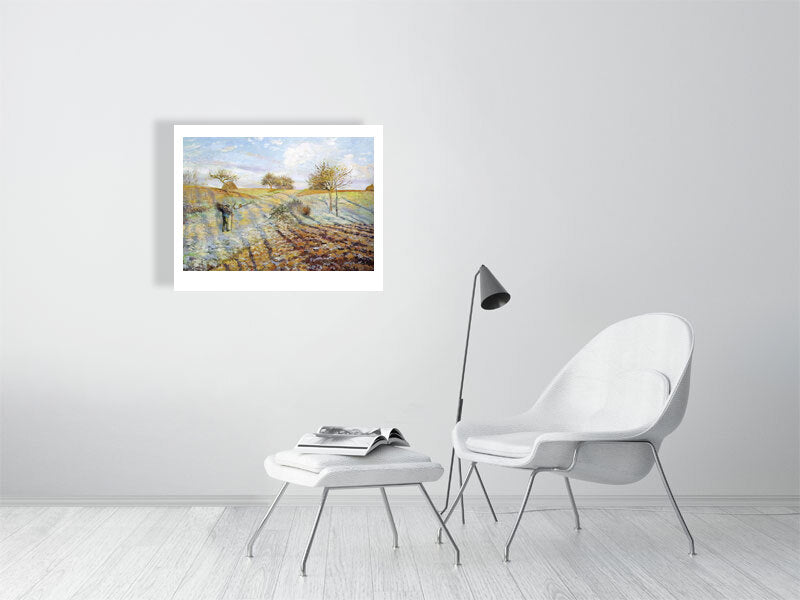
Pissarro - Hoarfrost (1873)

Pissarro - Hoarfrost (1873)

Regular price $210
Sale price $210 Regular price
OFF Sold out
Shipping calculated at checkout.

Free shipping to Domestic US addresses!

Vendor

AdamPacio.com

Sub total

$210
  • American Express
  • Apple Pay
  • Diners Club
  • Discover
  • Google Pay
  • Mastercard
  • PayPal
  • Shop Pay
  • Venmo
  • Visa
View full details
Description

Selecting a piece of history for your home is an act of curation that reflects your own journey toward clarity and center. This fine art giclée is more than a reproduction; it is a high-fidelity window into the Modern Art Canon, produced with the technical precision required for professional gallery display. By prioritizing archival materials and local Brooklyn craftsmanship, we ensure that the intellectual resonance of the artwork is matched by its physical presence in your space.

Every print is designed to provide a sense of lasting value and quiet confidence. This is an investment in your environment, an invitation to replace the noise of modern life with the enduring narrative of the great innovators. Whether displayed as a single focal point or as part of a larger historical survey, these prints provide the tactile and visual aura that only genuine museum-grade materials can deliver.

Museum-Quality Craftsmanship

The Paper: 100% cotton Hahnemühle Photo Rag, world-renowned for its beautiful felt structure and archival longevity.

The Print: Genuine Giclée process using pigment-based inks for depth, detail, and an "aura" that rivals museum originals.

The Production: Printed locally in NYC to ensure the highest standards of color accuracy and material integrity.

The Story

The Rebel in the Frost

Camille Pissarro did not paint winter to make a Christmas card. He painted it because he was tired of the lies told by the French Academy. While the state-sponsored Salon demanded polished myths and dead Roman heroes, Pissarro took his easel into the biting cold of the Oise valley. He stood in the mud until his wool coat stank of woodsmoke and damp.

Hoarfrost is a record of that physical struggle. Critics in 1874 hated it. They saw the thick, crusted paint and called it scrapings from a dirty palette. They were wrong. Pissarro was using a palette knife to mimic the heavy, frozen texture of the soil itself. He was building a world out of pigment.

Look at the shadows. You will not find a drop of black paint in them. Pissarro famously banned black from his kit because nature does not use it. Instead, he found the truth in deep blues and jarring violets. These colors captured the metallic tang of the winter air and the flicker of gaslight starting to glow in nearby cafes.

This painting was a declaration of war. By showing it at the first Impressionist exhibition, Pissarro helped trigger a breakaway from the state-sponsored art machine. He and his band of rebels were staging a coup against the Academy. They knew the camera was already stealing the job of capturing reality. They decided to capture the feeling of being alive instead.

References

  • Berson, Ruth. The Impressionist Exhibitions in Figures and Documents. University of Chicago Press, 1996.
  • Pissarro, Joachim. Camille Pissarro. New York: Rizzoli International, 1993.
  • Rewald, John. The History of Impressionism. Museum of Modern Art, 1973.
  • Shiff, Richard. Cézanne and the End of Impressionism. University of Chicago Press, 1984.
About your query!