Skip to product information
1 of 4

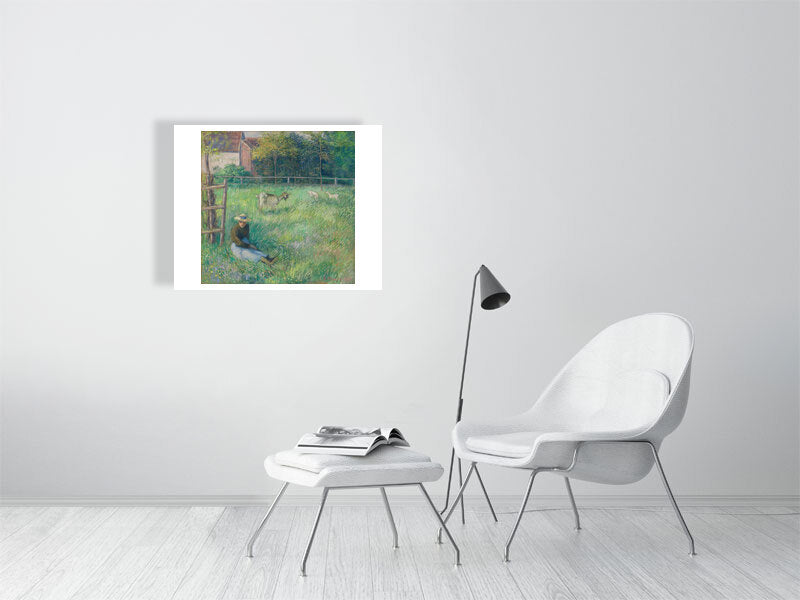
Pissarro - Seated Woman with Goats - (1885)

Pissarro - Seated Woman with Goats - (1885)

Regular price $210
Sale price $210 Regular price
OFF Sold out
Shipping calculated at checkout.

Free shipping to Domestic US addresses!

Vendor

AdamPacio.com

Sub total

$210
  • American Express
  • Apple Pay
  • Diners Club
  • Discover
  • Google Pay
  • Mastercard
  • PayPal
  • Shop Pay
  • Venmo
  • Visa
View full details
Description

Selecting a piece of history for your home is an act of curation that reflects your own journey toward clarity and center. This fine art giclée is more than a reproduction; it is a high-fidelity window into the Modern Art Canon, produced with the technical precision required for professional gallery display. By prioritizing archival materials and local Brooklyn craftsmanship, we ensure that the intellectual resonance of the artwork is matched by its physical presence in your space.

Every print is designed to provide a sense of lasting value and quiet confidence. This is an investment in your environment, an invitation to replace the noise of modern life with the enduring narrative of the great innovators. Whether displayed as a single focal point or as part of a larger historical survey, these prints provide the tactile and visual aura that only genuine museum-grade materials can deliver.

Museum-Quality Craftsmanship

The Paper: 100% cotton Hahnemühle Photo Rag, world-renowned for its beautiful felt structure and archival longevity.

The Print: Genuine Giclée process using pigment-based inks for depth, detail, and an "aura" that rivals museum originals.

The Production: Printed locally in NYC to ensure the highest standards of color accuracy and material integrity.

The Story

The Radical Discipline of the Dot

By 1885, Camille Pissarro was the elder statesman of Impressionism. He was the only artist to show in all eight of the group’s exhibitions. Most men his age would have coasted on their hard-won reputation. Instead, Pissarro blew up his career.

He met a young rebel named Georges Seurat and became obsessed with the science of the eye. He abandoned the loose, atmospheric brushwork that the public finally liked. He replaced it with the rigid, agonizing discipline of Pointillism. Seated Woman with Goats is the evidence of that defection.

This wasn't a quick sketch in a field. It was a months-long labor of microscopic precision. Pissarro sat in his studio and applied tiny dots of pigment based on the color theories of Michel Eugène Chevreul. He wanted the light to vibrate on the canvas rather than mix on the palette.

The market hated it. The kingmakers and collectors who were finally opening their wallets slammed them shut again. They wanted pretty, breezy pictures. Pissarro gave them a peasant woman rendered with the cold logic of a laboratory.

He was nearly broke and living in a countryside that smelled of manure and dry hay. Radical anarchist leaflets were moving through the backrooms of Paris, and Pissarro’s refusal to paint for the "bourgeois" market was its own form of political riot. He didn't care about being popular. He cared about the truth of the light and the dignity of the laborer.

References

  • Brettell, Richard R. Pissarro and Pontoise: The Painter in a Landscape. Yale University Press, 1990.
  • Chevreul, Michel Eugène. The Laws of Contrast of Colour. Routledge, 1861.
  • Rewald, John. The History of Impressionism. Museum of Modern Art, 1973.
  • Ward, Martha. Pissarro, Neo-Impressionism, and the Spaces of the Avant-Garde. University of Chicago Press, 1996.
About your query!