Skip to product information
1 of 4

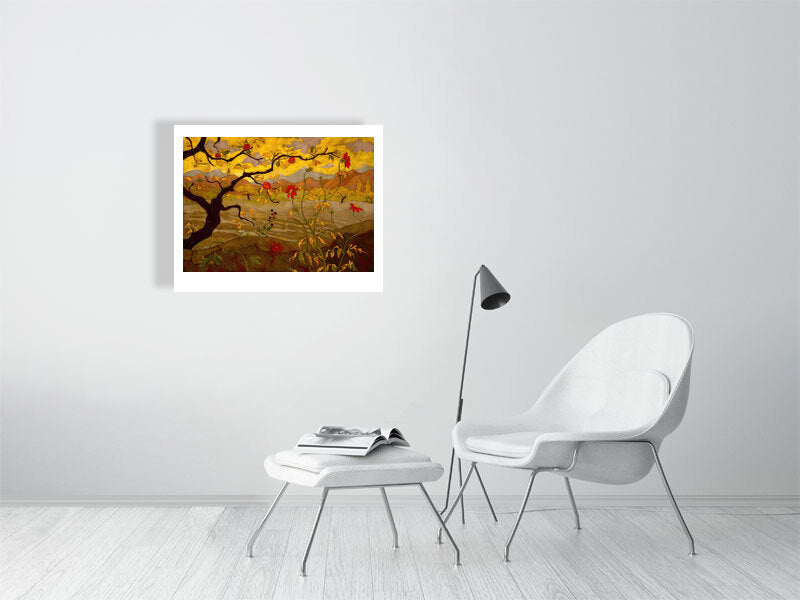
Ranson, Paul - Apple Tree with Red Fruit (1902)

Ranson, Paul - Apple Tree with Red Fruit (1902)

Regular price $210
Sale price $210 Regular price
OFF Sold out
Shipping calculated at checkout.

Free shipping to Domestic US addresses!

Vendor

AdamPacio.com

Sub total

$210
  • American Express
  • Apple Pay
  • Diners Club
  • Discover
  • Google Pay
  • Mastercard
  • PayPal
  • Shop Pay
  • Venmo
  • Visa
View full details
Description

Selecting a piece of history for your home is an act of curation that reflects your own journey toward clarity and center. This fine art giclée is more than a reproduction; it is a high-fidelity window into the Modern Art Canon, produced with the technical precision required for professional gallery display. By prioritizing archival materials and local Brooklyn craftsmanship, we ensure that the intellectual resonance of the artwork is matched by its physical presence in your space.

Every print is designed to provide a sense of lasting value and quiet confidence. This is an investment in your environment, an invitation to replace the noise of modern life with the enduring narrative of the great innovators. Whether displayed as a single focal point or as part of a larger historical survey, these prints provide the tactile and visual aura that only genuine museum-grade materials can deliver.

Museum-Quality Craftsmanship

The Paper: 100% cotton Hahnemühle Photo Rag, world-renowned for its beautiful felt structure and archival longevity.

The Print: Genuine Giclée process using pigment-based inks for depth, detail, and an "aura" that rivals museum originals.

The Production: Printed locally in NYC to ensure the highest standards of color accuracy and material integrity.

The Story

The Prophet of the Orchard

Paul Ranson looked at an apple tree and saw a rhythm. By 1902 the Nabis were winding down but their esoteric way of seeing and spiritual energy was still pulsing through Ranson. They called themselves prophets because they were bored with the light-drenched fluff of the Impressionists. They wanted something deeper. They wanted something flat and decorative that felt like a medieval tapestry or a Japanese woodblock print.

Apple Tree with Red Fruit is not a landscape, it’s a graphic manifesto. Those red orbs aren’t realistic fruit you can bite into, they’re symbols arranged in a decorative grid. They look like they’re floating in a sea of swirling lines that would soon become the backbone of Art Nouveau. Ranson was obsessed with the way a line could move across a canvas like a living thing. He lived in a world where a simple tree could be a sacred object if you stared at it long enough.

The dimensions are modest but the ambition is huge. It is seventy-three by sixty centimeters of pure rhythmic intent. It likely sat in the Salon des Independants surrounded by other rebels who thought the old guard was dead. Ranson died just seven years after this. He left behind a vision of nature that was less about the dirt and more about the soul. It is flat and it is strange and it is exactly what happens when you decide that a painting should be more than a window. It should be a shield against the mundane.

References

Clement, Russell T. Les Nabis: A Bio-Bibliographical Sourcebook. Greenwood Press, 1996.

Frèches-Thory, Claire and Antoine Terrasse. The Nabis: Bonnard, Vuillard, and Their Circle. Harry N. Abrams, 1991.

Ranson, Paul. Apple Tree with Red Fruit. 1902. Oil on canvas. Private Collection.

Shipping & Satisfaction

Shipping & Satisfaction

Free shipping on all US orders, always.

Every order ships to US addresses at no additional cost. Allow up to 10 business days from fulfillment for delivery.

Your investment is protected. Material or print defects are replaced or fully refunded — no friction, no negotiation. If the work doesn't resonate aesthetically within 5 days of receipt, reach out and we'll make it right.

One note worth reading before you order: because every piece is produced on demand, we're unable to accommodate returns for incorrect size selections. Consult the product specs before you commit — they're there to make sure what arrives is exactly what you envisioned.

About your query!