Skip to product information
1 of 7

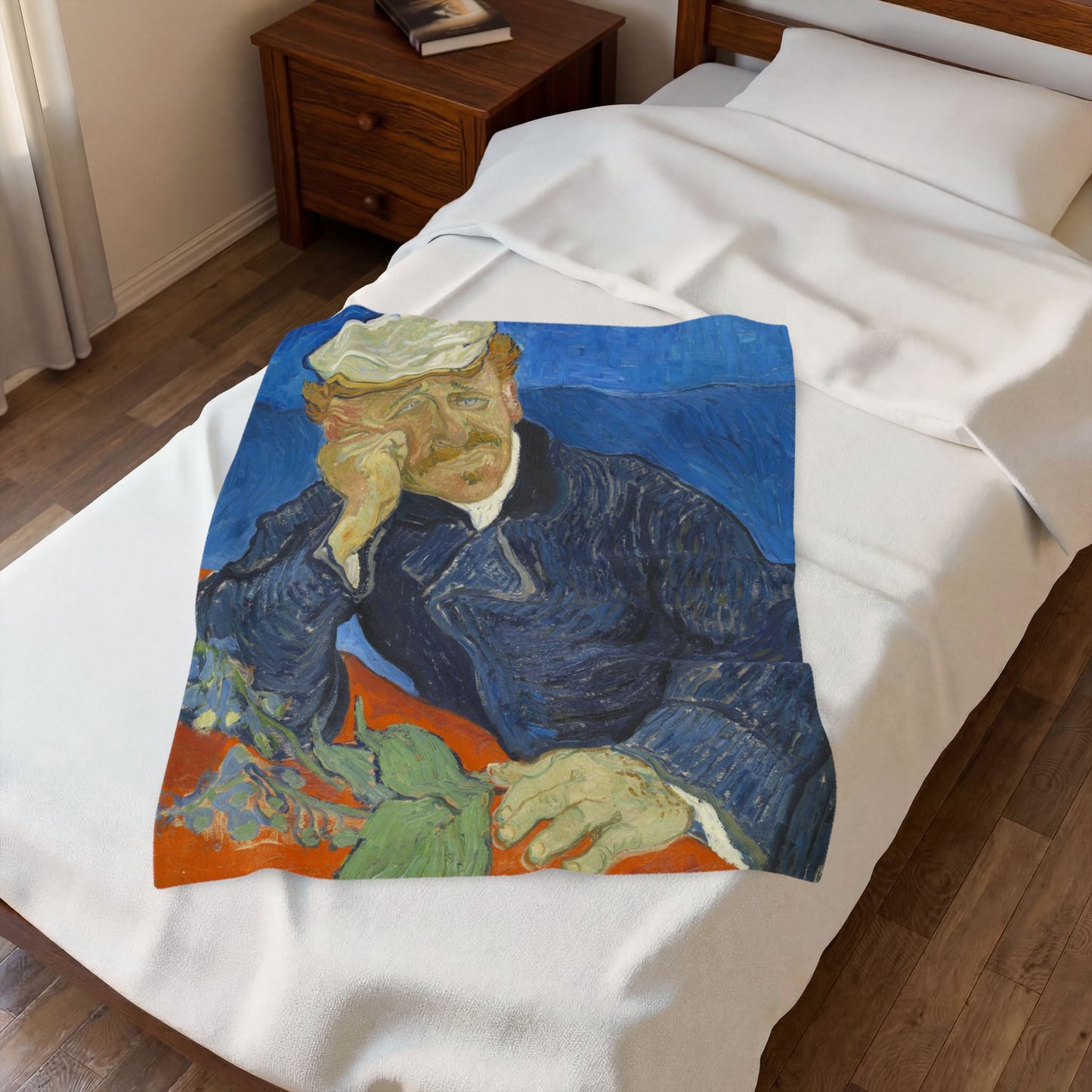
Van Gogh, Vincent - Portrait of Dr. Paul Gachet (1890) - Velveteen Plush Blanket

Van Gogh, Vincent - Portrait of Dr. Paul Gachet (1890) - Velveteen Plush Blanket

Regular price $42
Sale price $42 Regular price
OFF Sold out
Shipping calculated at checkout.

Free shipping to Domestic US addresses!

Vendor

Printify

Sub total

$42
  • American Express
  • Apple Pay
  • Diners Club
  • Discover
  • Google Pay
  • Mastercard
  • PayPal
  • Shop Pay
  • Venmo
  • Visa
View full details
Description

Soft enough to reach for. Meaningful enough to keep.

The objects that end up staying — draped over the arm of a chair, folded at the foot of the bed, claimed by whoever sits closest — are rarely the ones you bought for the room. They're the ones that earned it. When you're building a space with intention, a velveteen plush blanket printed with art you chose is exactly that kind of object: it pulls weight on comfort and meaning at once. One-sided print on medium heavy-weight velveteen, 8.85 oz/yd². Double needle topstitch on all seams. Three sizes: 30×40, 50×60, and 60×80. Note: up to 3" size variance is standard for this construction.

Care Instructions

Machine wash cold, max 30°C / 90°F — hand wash extends the life of the print. Tumble dry low. No bleach, no ironing, no dry cleaning.

Art Story

The Melancholy Mirror

Vincent van Gogh painted Dr. Gachet because he found a man whose soul was as shattered as his own. It was 1890 in Auvers-sur-Oise. The air smelled of damp earth and lavender. Van Gogh was fresh out of the asylum, looking for a savior when he found a doctor who looked like he needed one too.

Gachet sits with his head resting on a weary hand. His eyes aren’t looking at the viewer, but instead regard the end of the world. On the red table sits a sprig of foxglove, a garden source of the substance digitalis, used as a heart medication. In the late 19th century, psychology and neurology were brutal, primitive attempts to navigate an internal landscape no one understood. Doctors like Gachet were trying to cure the mind they barely understood while the steam engine and the telegraph made the world move too fast for the human spirit to keep up.

This is the human face of modernism’s exhaustion, the birth of aesthetic Expressionism trying to shed the skin of Post-Impressionism. Van Gogh used cobalt blues that feel like ice and reds that feel like a fever. He died only months after completing this painting. It took a century after that for the first version of this particular painting to be sold at auction for $82.5 million US. The world finally decided to pay for the pain it had ignored when the paint was still wet.

References

Bailey, M. (2018). Starry Night: Van Gogh at the Asylum. White Lion Publishing.

Distel, A., & Stein, S. A. (1999). Cézanne to Van Gogh: The Collection of Doctor Gachet. Metropolitan Museum of Art.

Naifeh, S., & Smith, G. W. (2011). Van Gogh: The Life. Random House.

Pickvance, R. (1986). Van Gogh in Saint-Rémy and Auvers. Metropolitan Museum of Art.

Van Gogh, V. (1996). The Letters of Vincent van Gogh. Penguin Classics.

Shipping & Satisfaction

Shipping & Satisfaction

Free shipping on all US orders, always.

Every order ships to US addresses at no additional cost. Allow up to 10 business days from fulfillment for delivery.

Your investment is protected. Material or print defects are replaced or fully refunded — no friction, no negotiation. If the work doesn't resonate aesthetically within 5 days of receipt, reach out and we'll make it right.

One note worth reading before you order: because every piece is produced on demand, we're unable to accommodate returns for incorrect size selections. Consult the product specs before you commit — they're there to make sure what arrives is exactly what you envisioned.

About your query!